What Causes It Around Here
Most of the housing across Surprise and the surrounding communities we service went up between 1979 and 2005, with the bulk dating to the 2000s build-out across the area's named neighborhoods. That means a lot of garage doors and openers are now old enough that plastic gears, nylon rollers, and circuit boards are past their rated life, and they're failing in a climate classified as severe heat - which is harder on moving mechanical parts and on electronics than almost anything else short of direct physical damage. Steel springs lose temper faster when a garage regularly sits well above 100 degrees for months at a stretch, and that shows up as a spring snapping years before it would in a milder climate. Opener logic boards see the same acceleration of failure. None of this is a defect specific to one house - it's the combination of a housing stock that's now entering its second or third decade and a climate that shortens the working life of the parts inside that garage.
The Symptom
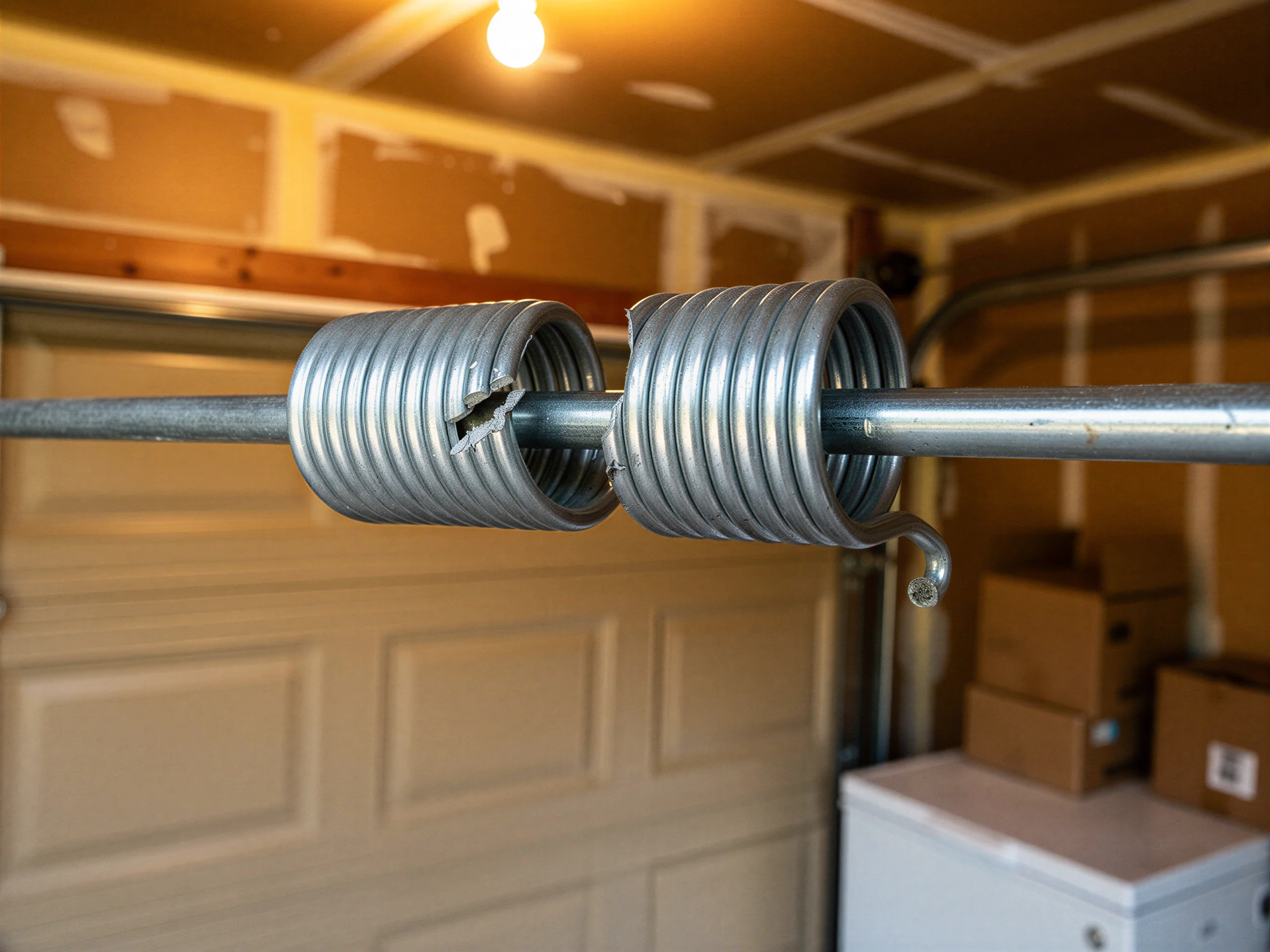
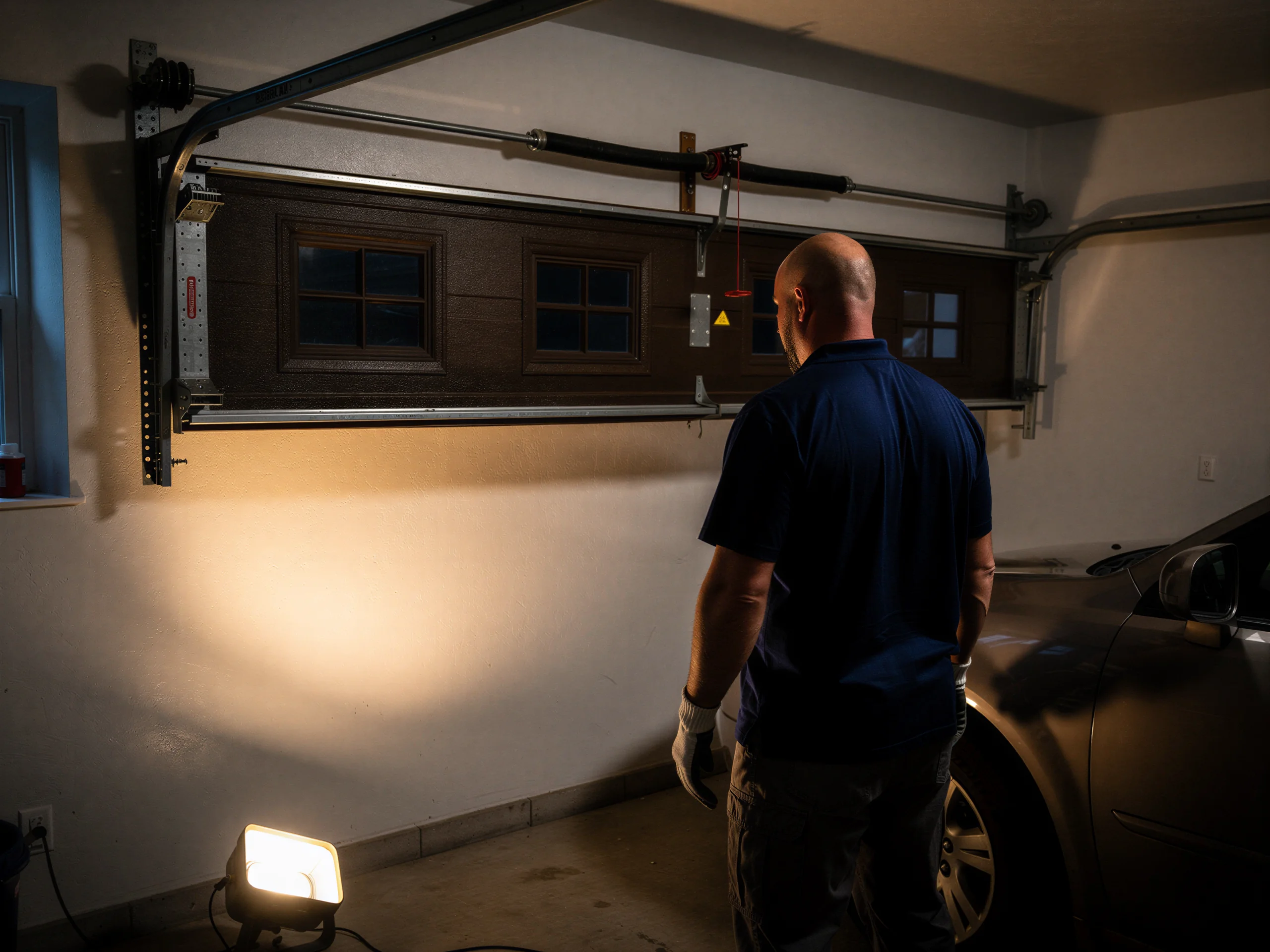
The door won't move, or it moves halfway and stops. Sometimes it's a loud bang in the garage followed by the door refusing to budge at all - that's usually a torsion spring letting go.
Humming opener, stuck door
Other times the opener hums but the door doesn't lift, or the door drops fast and uneven on one side. In homes built since 1979 through the early 2000s, which describes most of the Surprise service area, the common emergency calls are broken torsion springs, opener circuit boards fried by heat, and tracks that have warped just enough to bind a roller mid-cycle.
Open garage overnight risk
None of these are safe to leave overnight, especially if the door is stuck open - an open garage in triple-digit heat lets conditioned air pour out and lets anything else wander in.
Avoid forcing it manually
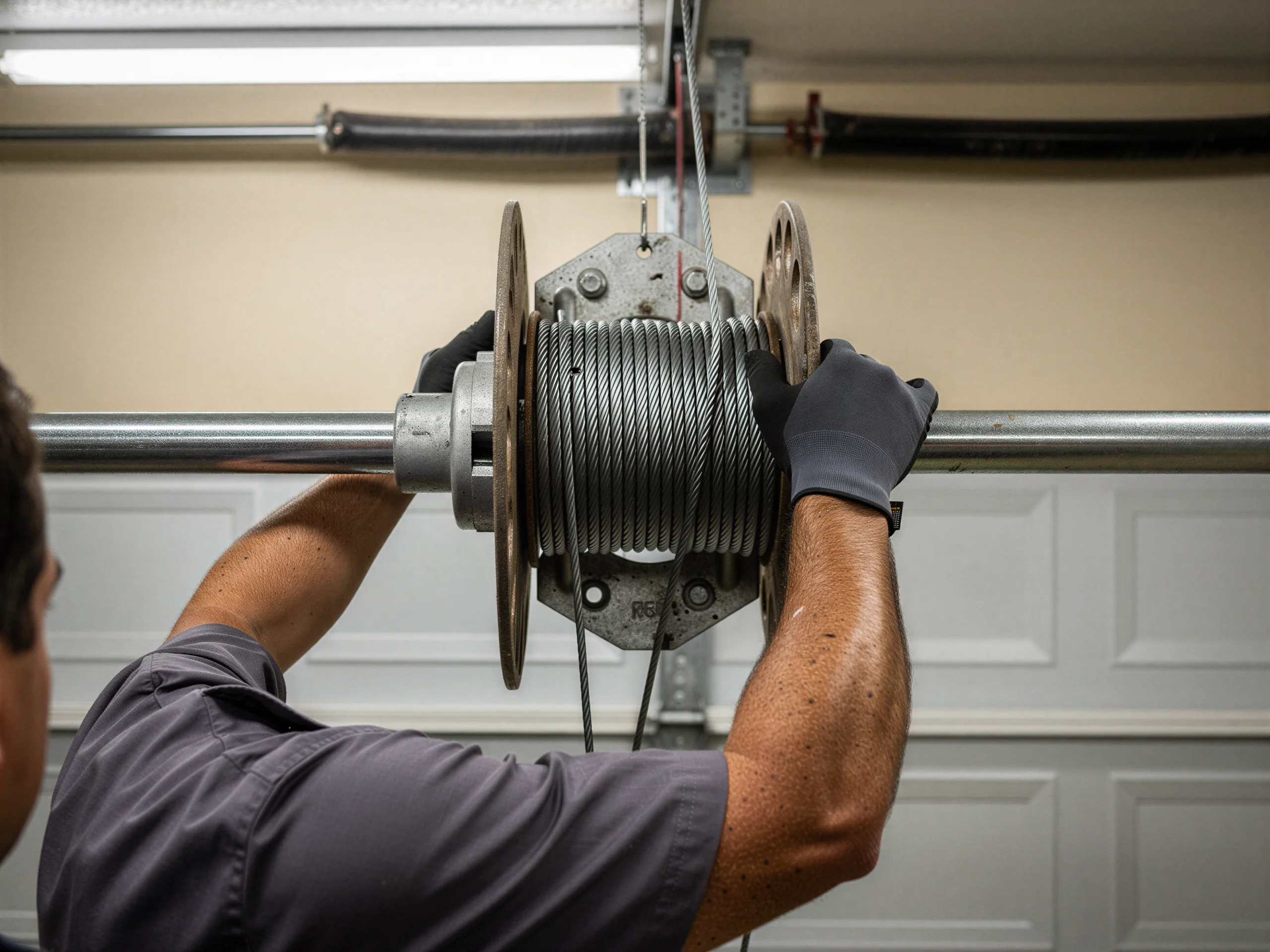
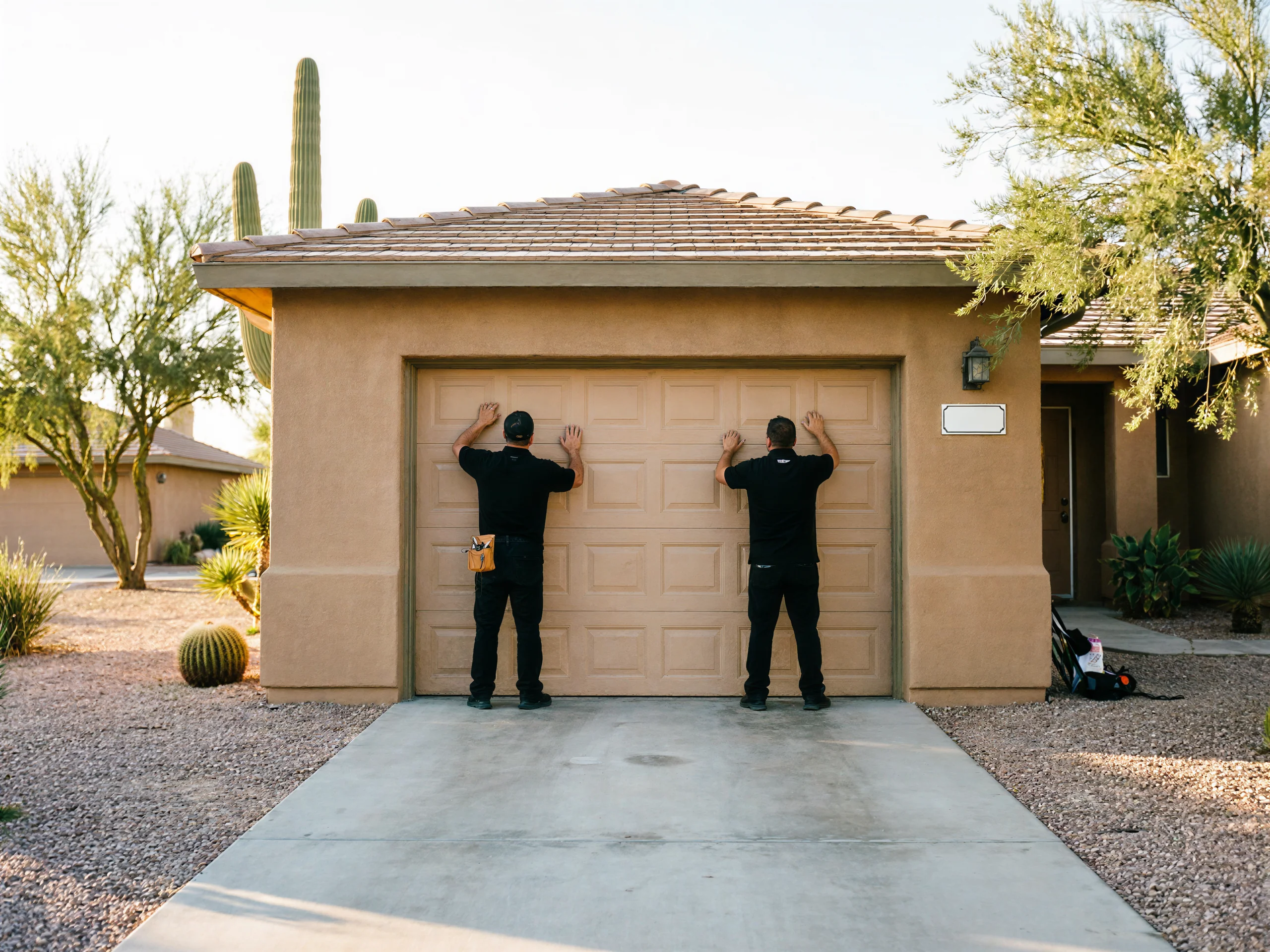
If the door won't close and you can't get it down by hand without forcing it, stop pulling and call. A spring under tension or a cable that's jumped its drum can do real damage to a hand in half a second.
How We Fix It
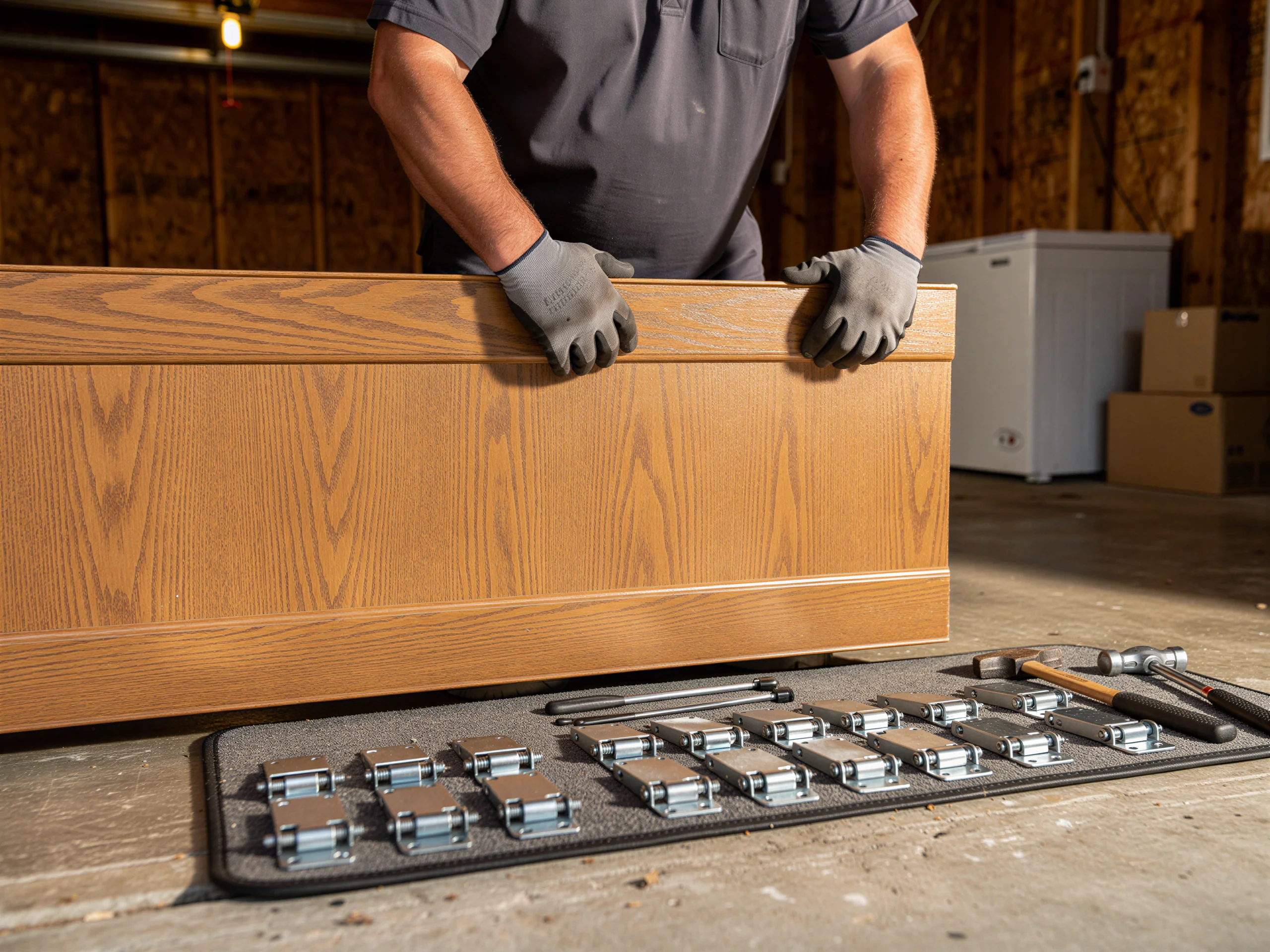
For a broken torsion spring, we match the wire size and wind to the original door weight rather than grabbing whatever's closest on the truck - guessing on spring size is how you get a door that slams down six months later.
Check board and capacitor
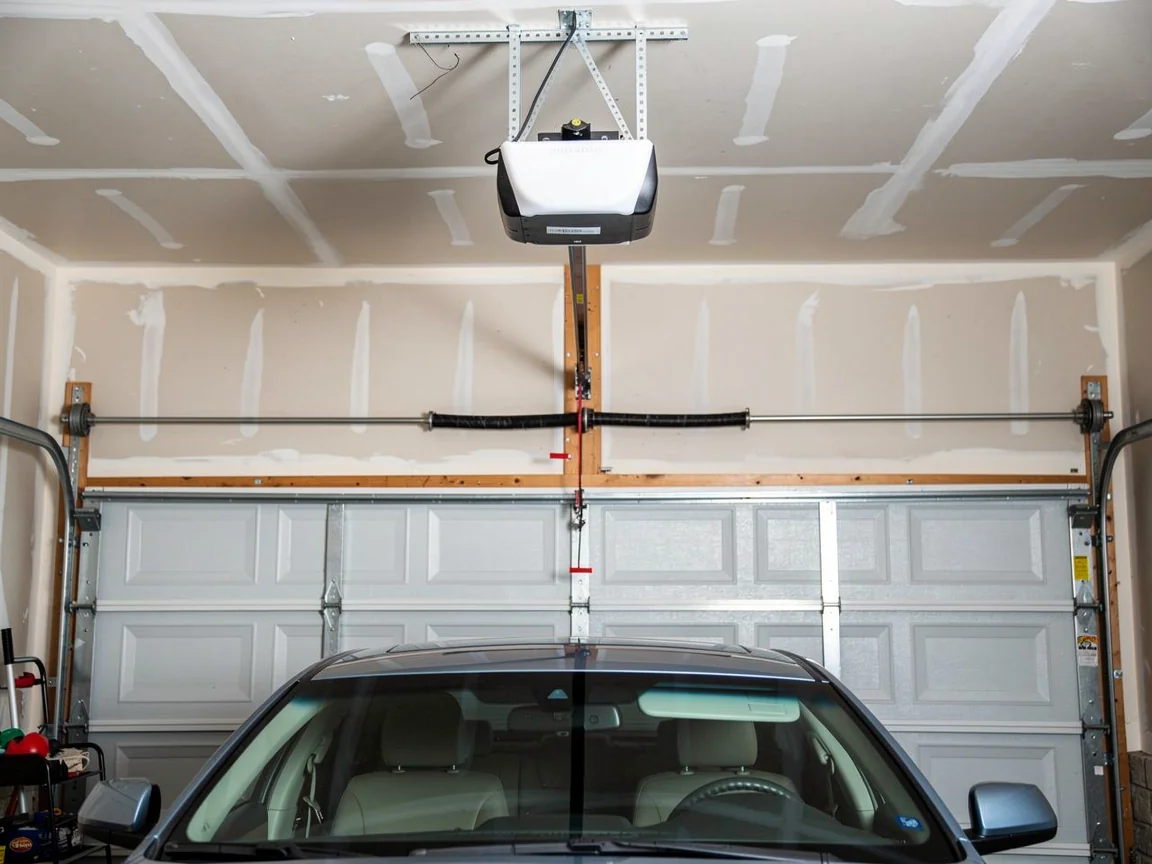
For opener failures, we check the circuit board and capacitor first, since heat-stressed electronics fail before the motor does on most of the openers installed in this area's 2000s-era housing stock.
Straighten track by section
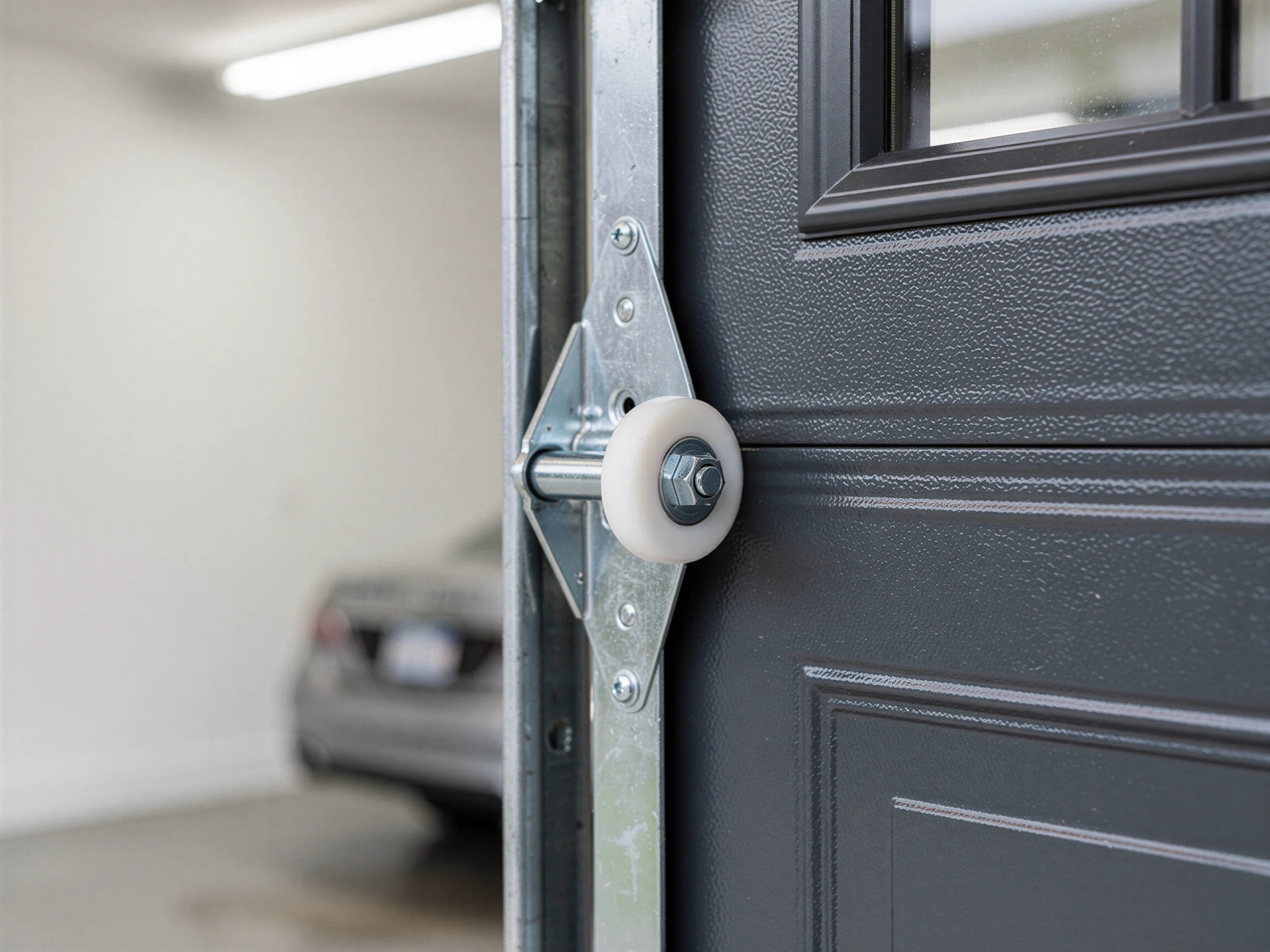
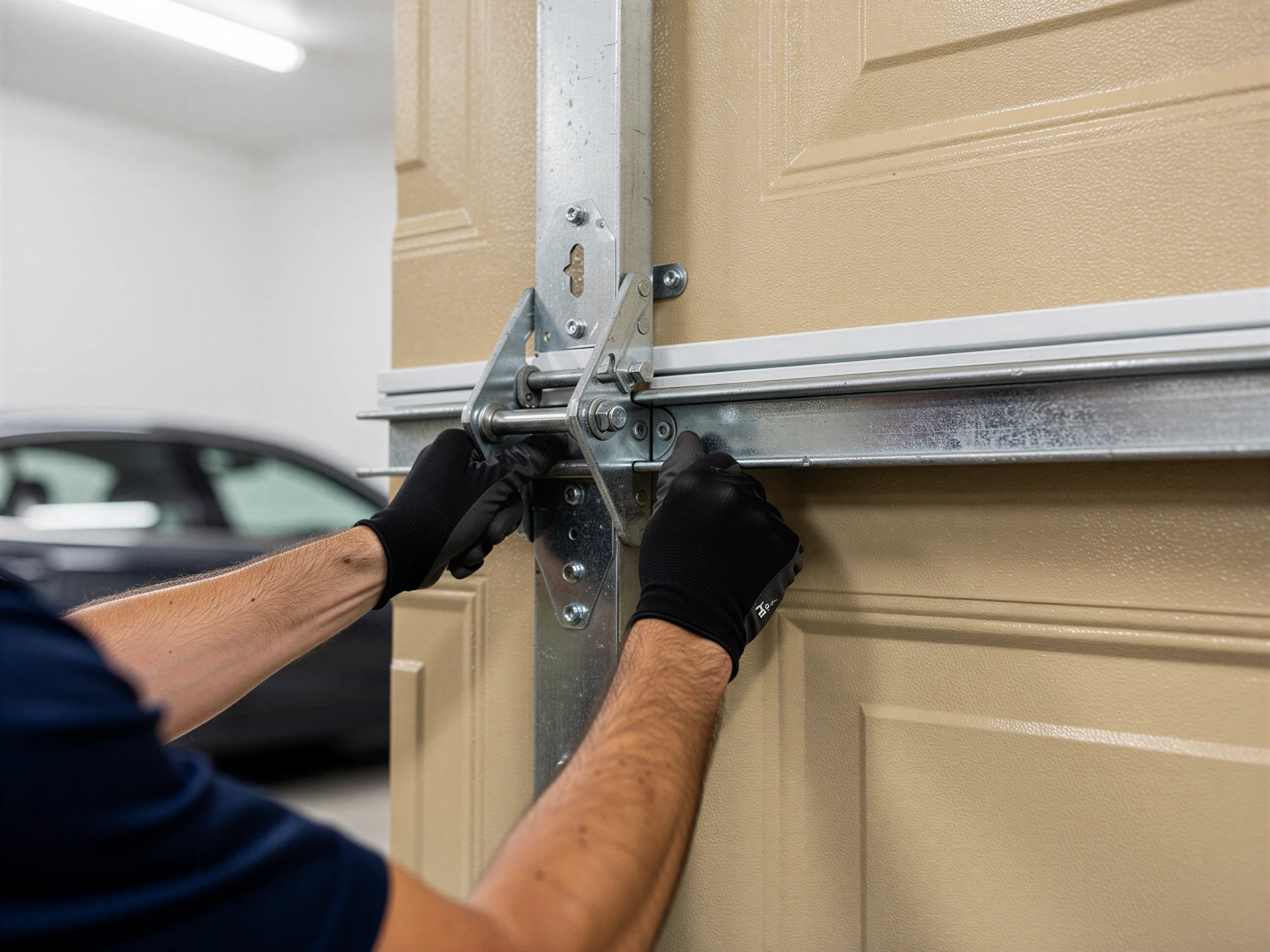
Bent track gets straightened or replaced section by section; we don't swap the whole track if one section is salvageable. Cables and rollers are cheap parts and we carry common sizes on the truck, so most of these jobs close out in one visit.
Replace instead of patching
What we won't do is patch a door that's cheaper to replace - if the opener is original to a house built in the early 1980s and the gearbox is stripped along with a cracked panel, we'll tell you straight that a new opener costs less than chasing parts for a 20-plus-year-old unit.
How Long It Takes
A straightforward torsion spring replacement or cable repair is usually a same-visit fix once we're on site - an hour or so of work. Opener board or logic failures can take a bit longer to diagnose if the symptom is intermittent, since heat-related failures sometimes don't show themselves until the garage has baked all afternoon. The one honest limit here: if a part is unusual - an odd-width track or a discontinued opener model - we may need to order it, and that's a day or two, not an hour. We don't stock every part for every door in a service area this size, and we're not going to pretend otherwise. What we can promise is that we'll tell you on the first call whether it's a same-day fix or a parts-order situation, so you're not waiting around guessing.
Talk to a local pro
Garage door service in Surprise?
Same-day service with honest, upfront quotes.