How We Fix It
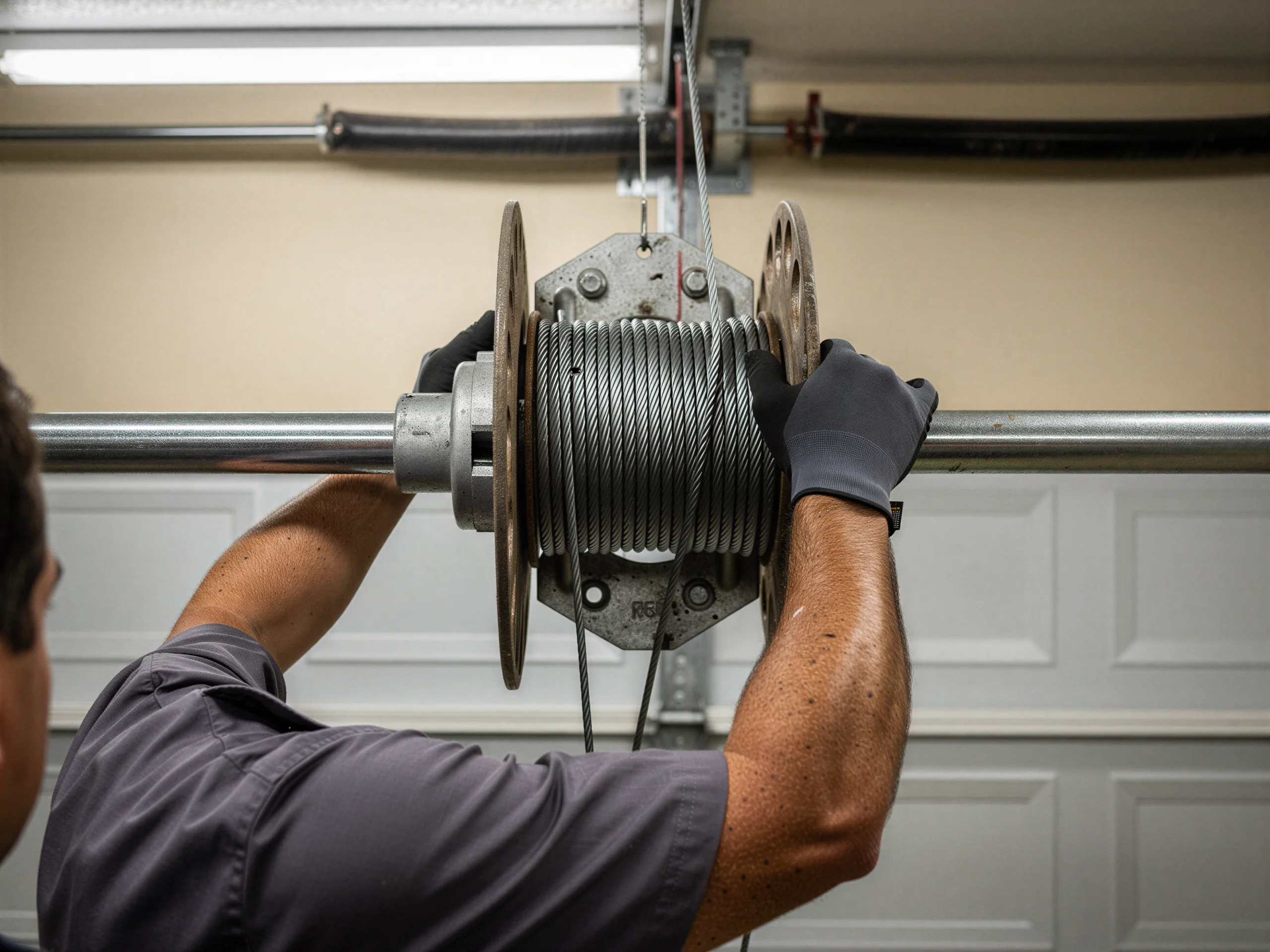
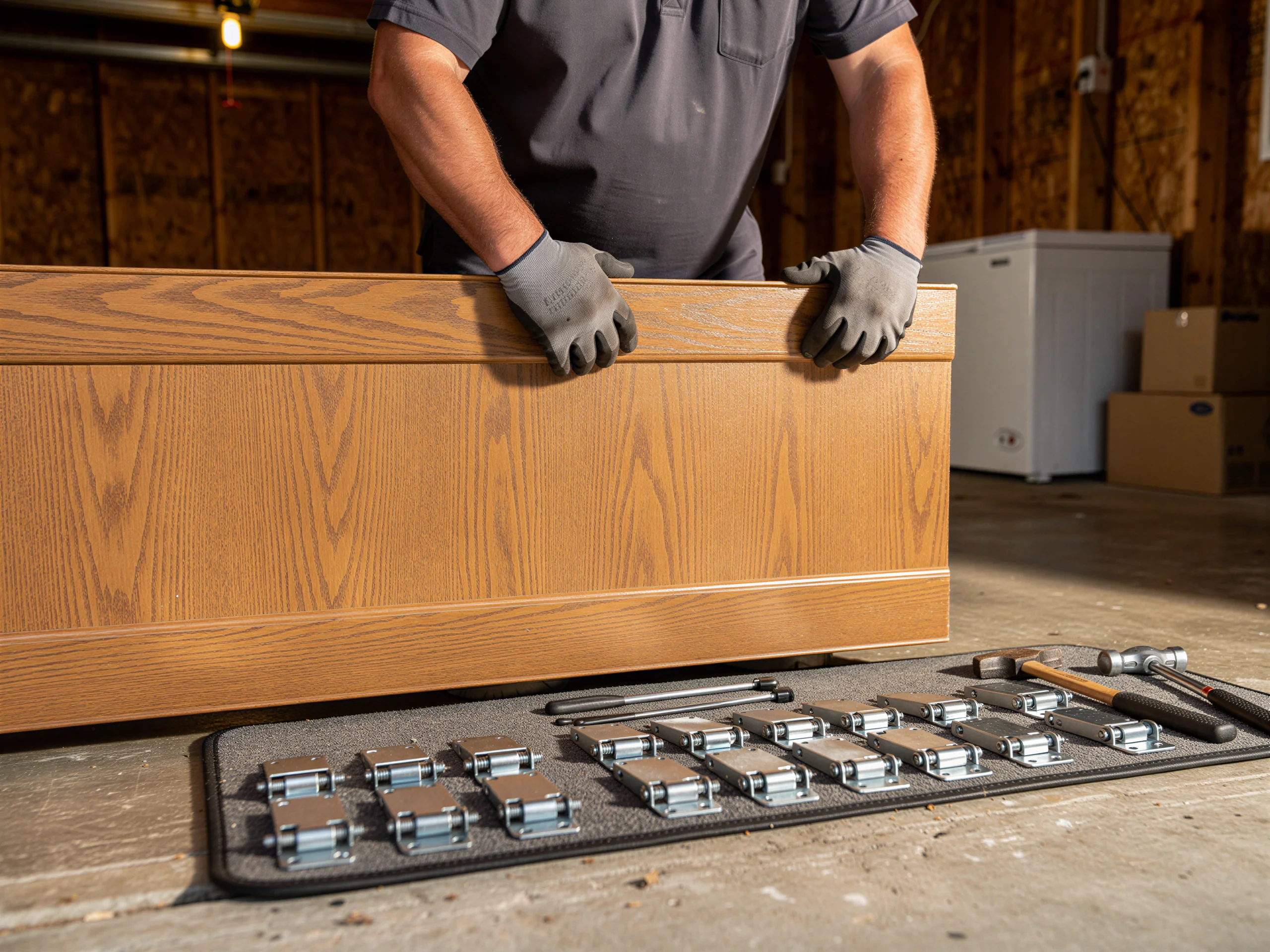
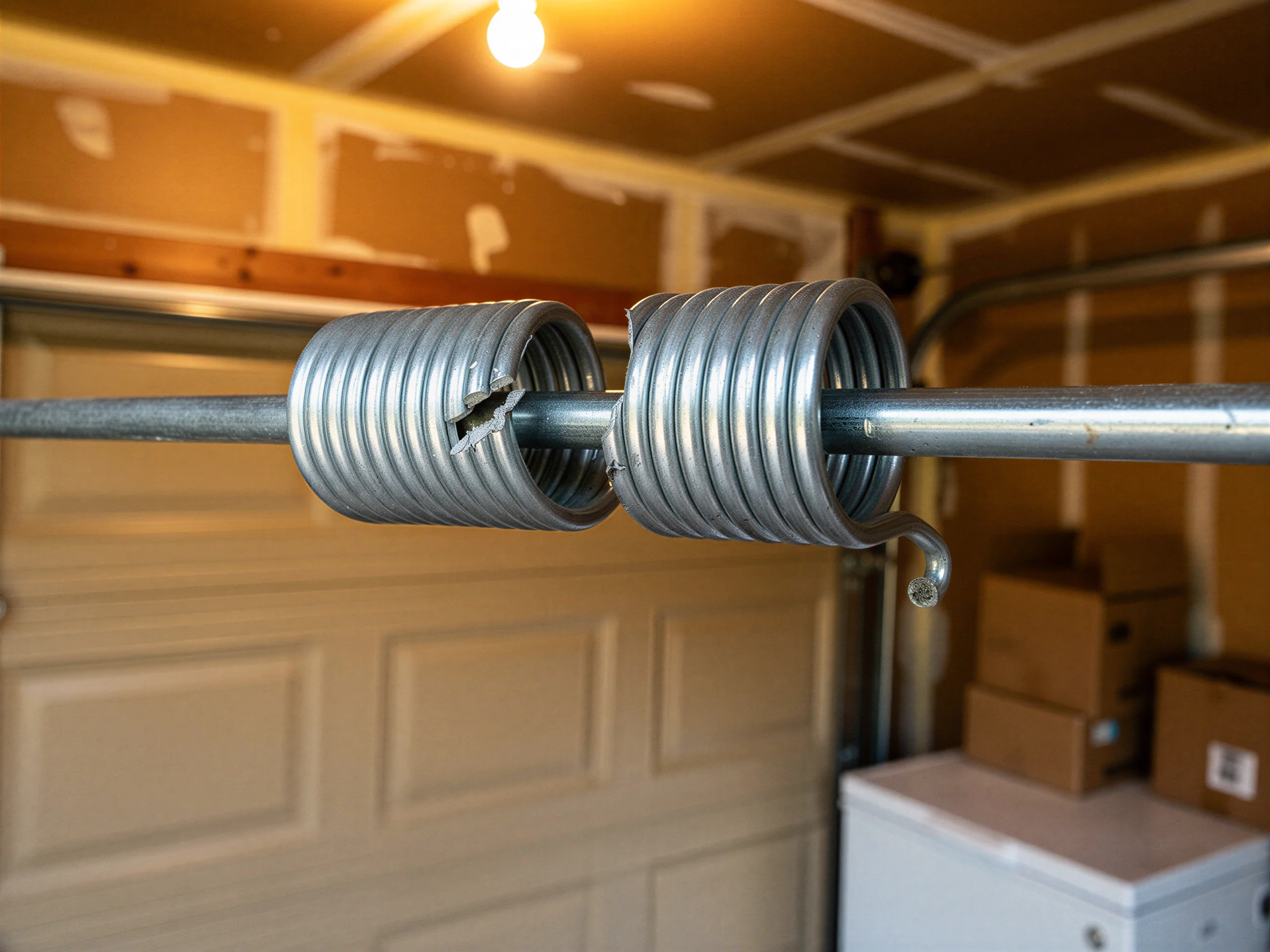
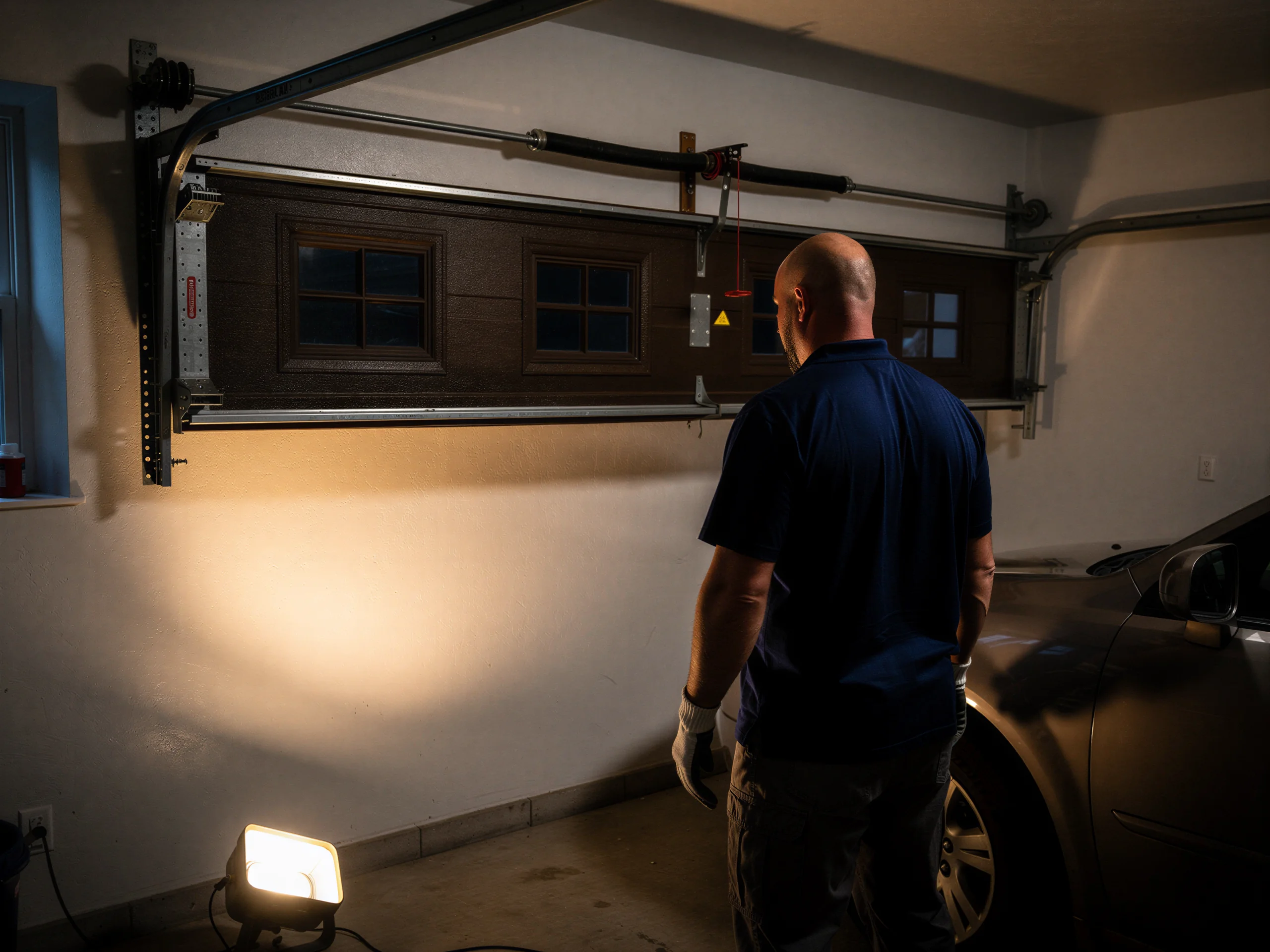
We run the call from our Surprise location, about 10 miles out, so the truck is loaded before it leaves - springs in common sizes, rollers, cables, and opener parts that fit doors from the 1979-2005 era this area was mostly built in. On a broken torsion spring, we measure the door, match the wire size and wind, and replace both springs if the set is original, since the second one is usually close behind the first.
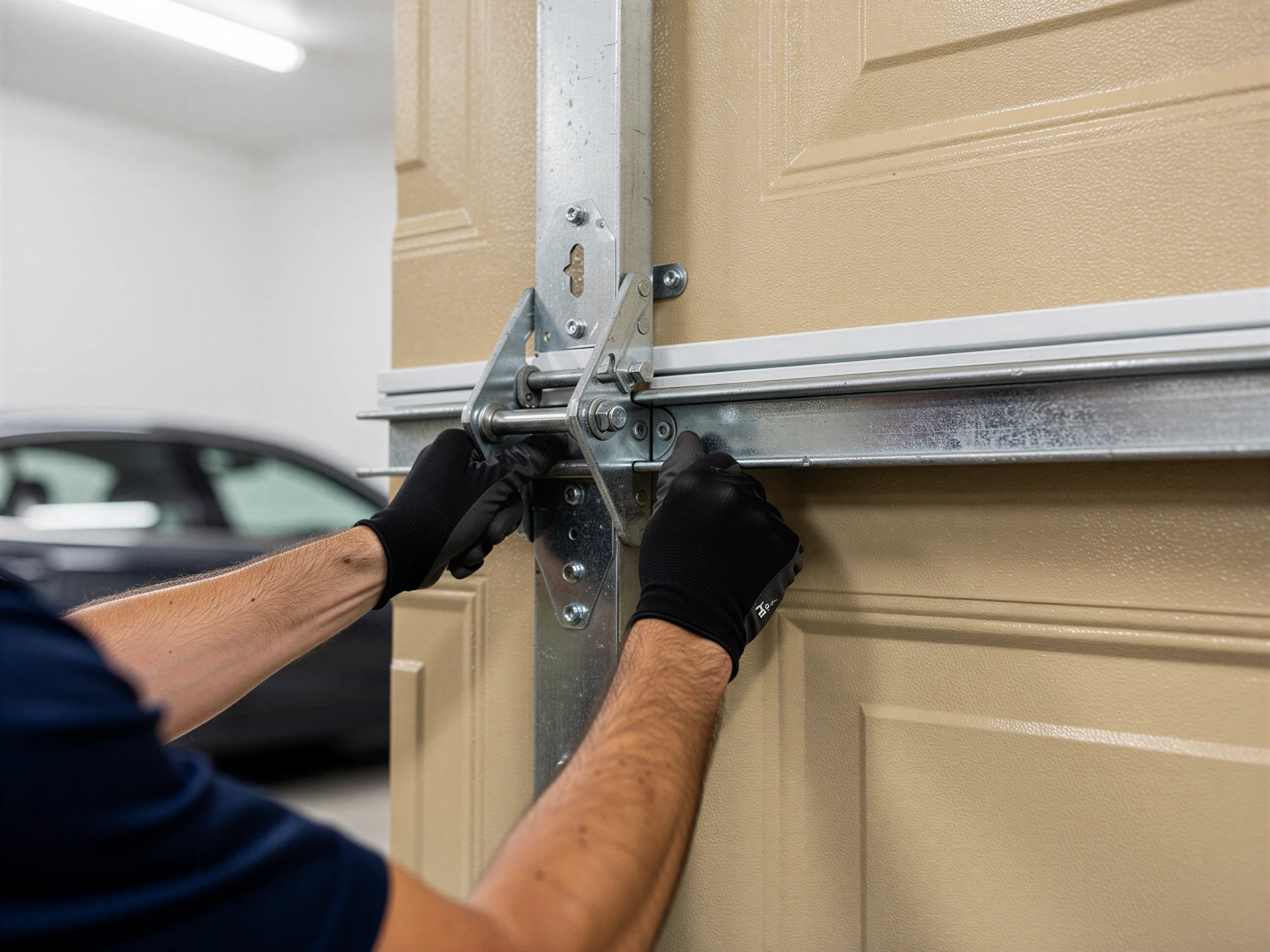
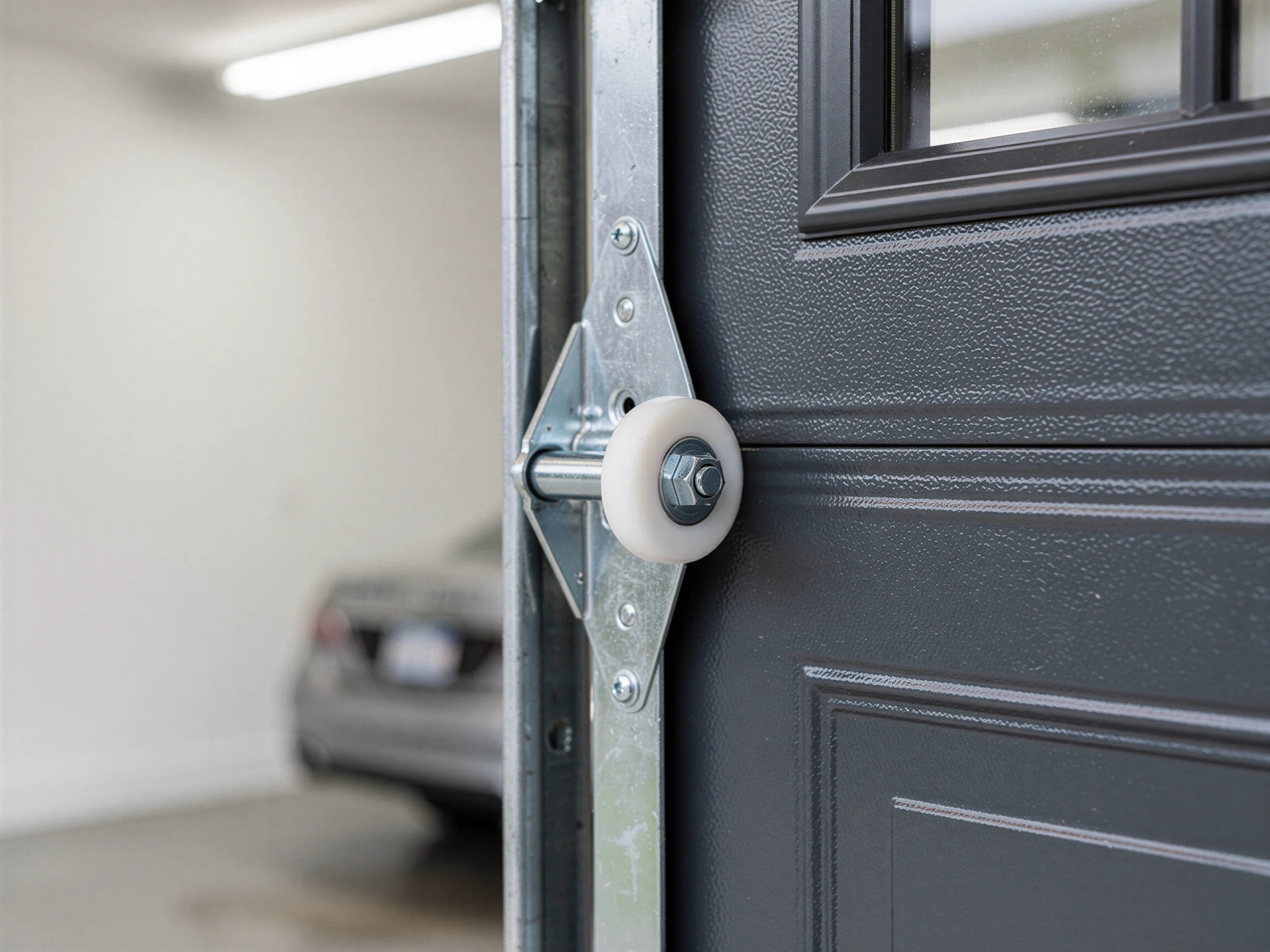
If the opener itself has failed - stripped gear, burned board, dead capacitor - we diagnose it on site rather than guessing over the phone. Cable and roller jobs are straightforward: cut the old hardware free, set new cable to length, balance the door, and run it through a full cycle before we call it done. We don't leave a door half-fixed because the next part is backordered; if something's not on the truck, we say so before we start, not after.
What Causes It Around Here
Start with the money, because it decides most of what happens next. Median household income in Youngtown runs $68,472, the same figure we see across the wider service area. At that income, a $200-400 spring or cable repair is an easy call. A full door replacement, which can run well past a thousand dollars depending on size and material, is a harder one - and for most owners here, it only makes sense if the door itself is failing, not just the spring or opener.
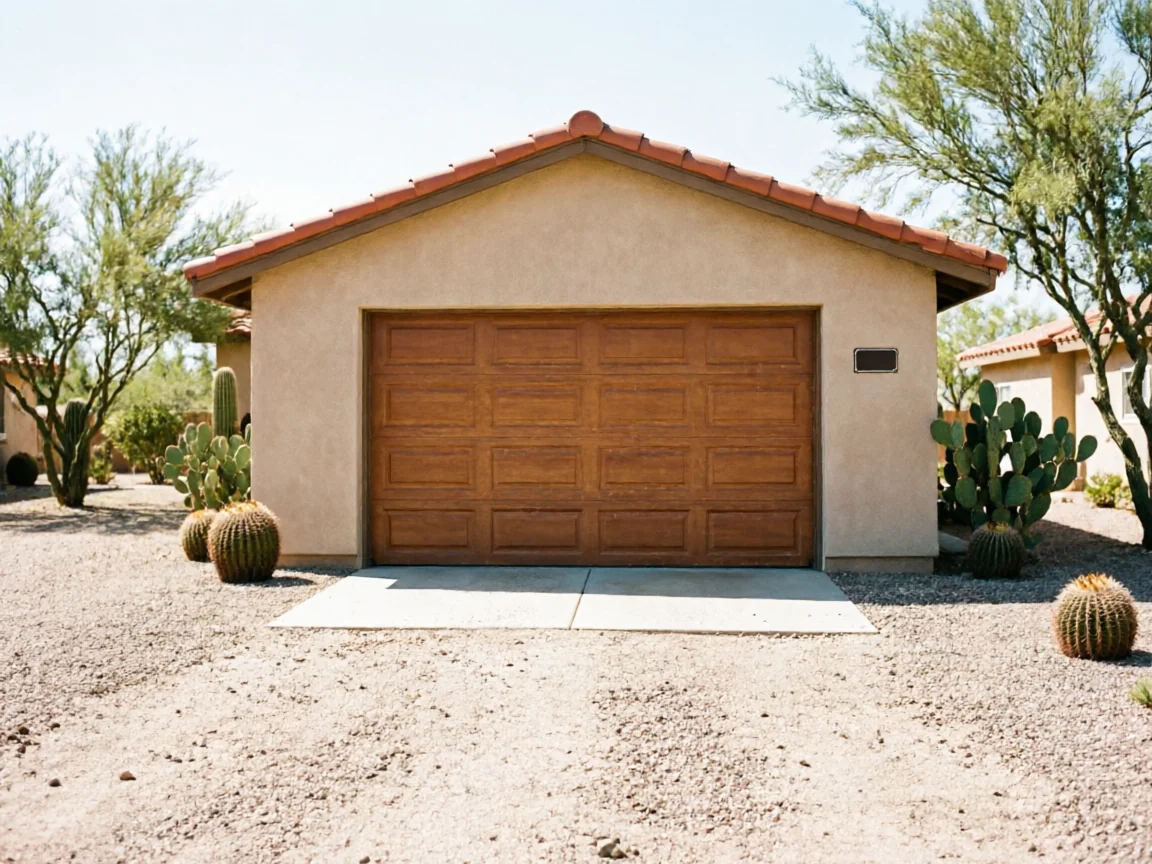
Youngtown's housing stock sits at the early edge of our area's 1979-2005 build window, with a median build year of 1979. That matters because a door installed in 1979 has had over forty years of cycles on its torsion spring, and Arizona's severe heat band doesn't go easy on steel. Heat makes springs lose temper faster and makes nylon rollers and plastic idler pulleys brittle. With roughly 2,460 households in Youngtown, that's a lot of original hardware still working past its design life, and when it fails, it tends to fail all at once - a snapped spring, a cable that frays through, or an opener gear that strips under the extra load a tired spring puts on it.
How Long It Takes
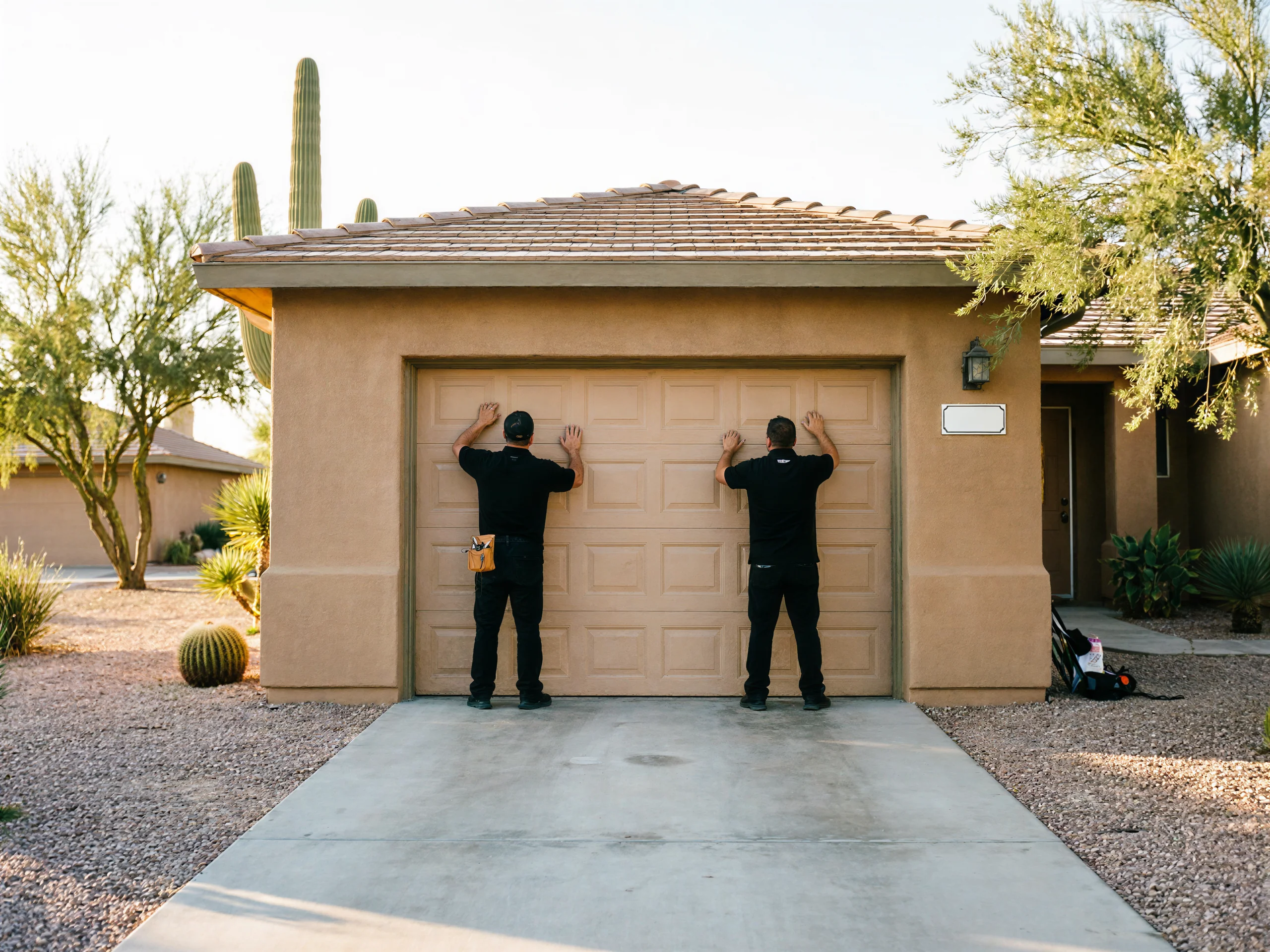
We don't quote a fixed arrival time for Youngtown specifically - the drive from Surprise is about 10 miles, and where you land in the day's schedule depends on how many calls came in ahead of yours. What we can tell you is what happens once the truck is on site: a spring replacement is usually the fastest job on the list, often done within an hour once we're there. Cable and roller work runs similar. Opener diagnosis and board replacement takes longer if we have to track down a specific part, and that's the one place where a job can stretch past a single visit - especially on older 1979-era doors where the exact opener model isn't something we stock on every truck.
The Complications
Houses built around 1979 sometimes carry hardware that's not made anymore - specific spring winds, older style extension spring setups instead of torsion, or openers with chain drives long since discontinued. We carry common replacement parts, but a true original part for a door that old sometimes isn't something we can match exactly, and we'll tell you that rather than force a fit that won't hold.
Income is the other complication, in a good way. At $68,472 median, most repairs here are worth doing rather than replacing the door outright - but that math flips once the door itself is warped, rusted through at the bottom panel, or the track is bent beyond adjustment. We'll tell you straight if you're past the point where a spring job fixes the real problem.
The DIY Question
A torsion spring holds real tension - enough to break fingers or worse if it lets go while you're working on it. We don't recommend touching it yourself, and we're not going to pretend otherwise to sound friendly.
Safe homeowner maintenance
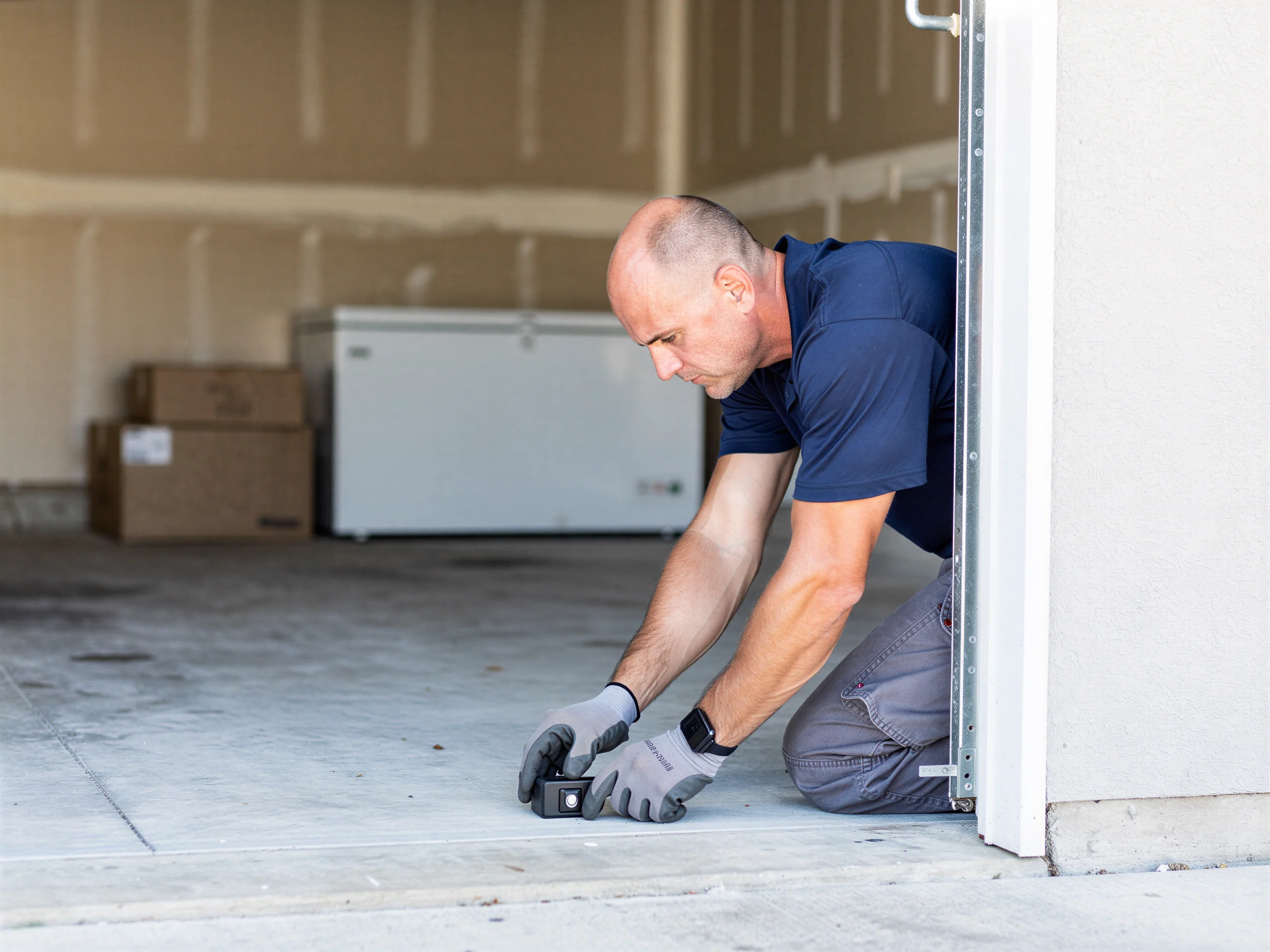
That's the honest limit on what a homeowner should do alone. What you can safely handle: lubricating hinges and rollers, tightening loose bolts on the track, checking the photo-eye sensors at the bottom of the track for dirt or misalignment, and testing the auto-reverse by placing a 2x4 flat under the door.
Reversal often sensor problem
If the door reverses or won't close at all, that's usually a sensor issue, not a spring issue, and it's a five-minute fix once you know where to look.
Sagging side means call
If the door won't move, or one side is clearly sagging lower than the other, stop there and call - that's a spring or cable problem, and it gets worse, not better, if you keep running the opener against it.
Talk to a local pro
Garage door service in Surprise?
Same-day service with honest, upfront quotes.