What Causes It Around Here
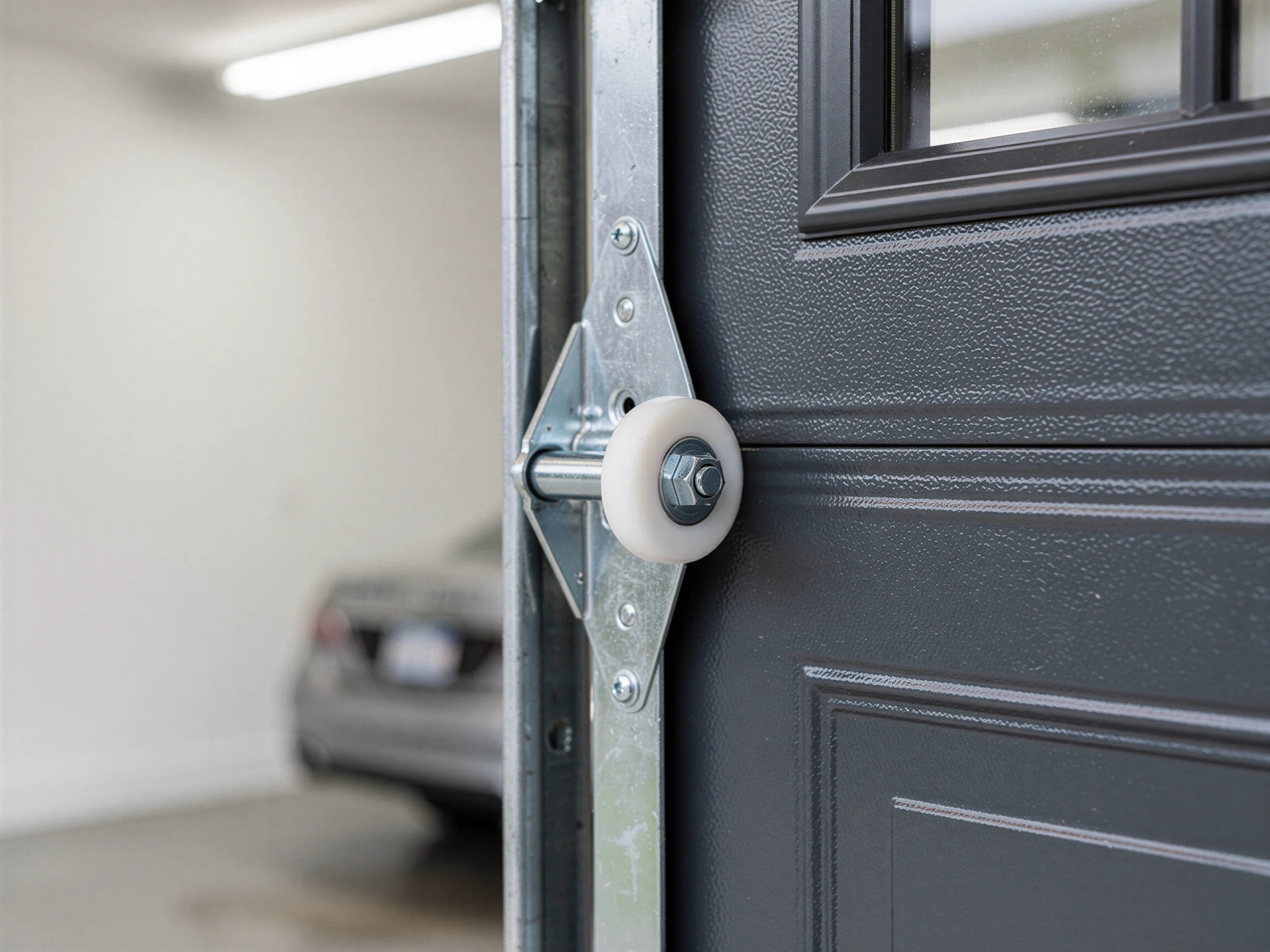
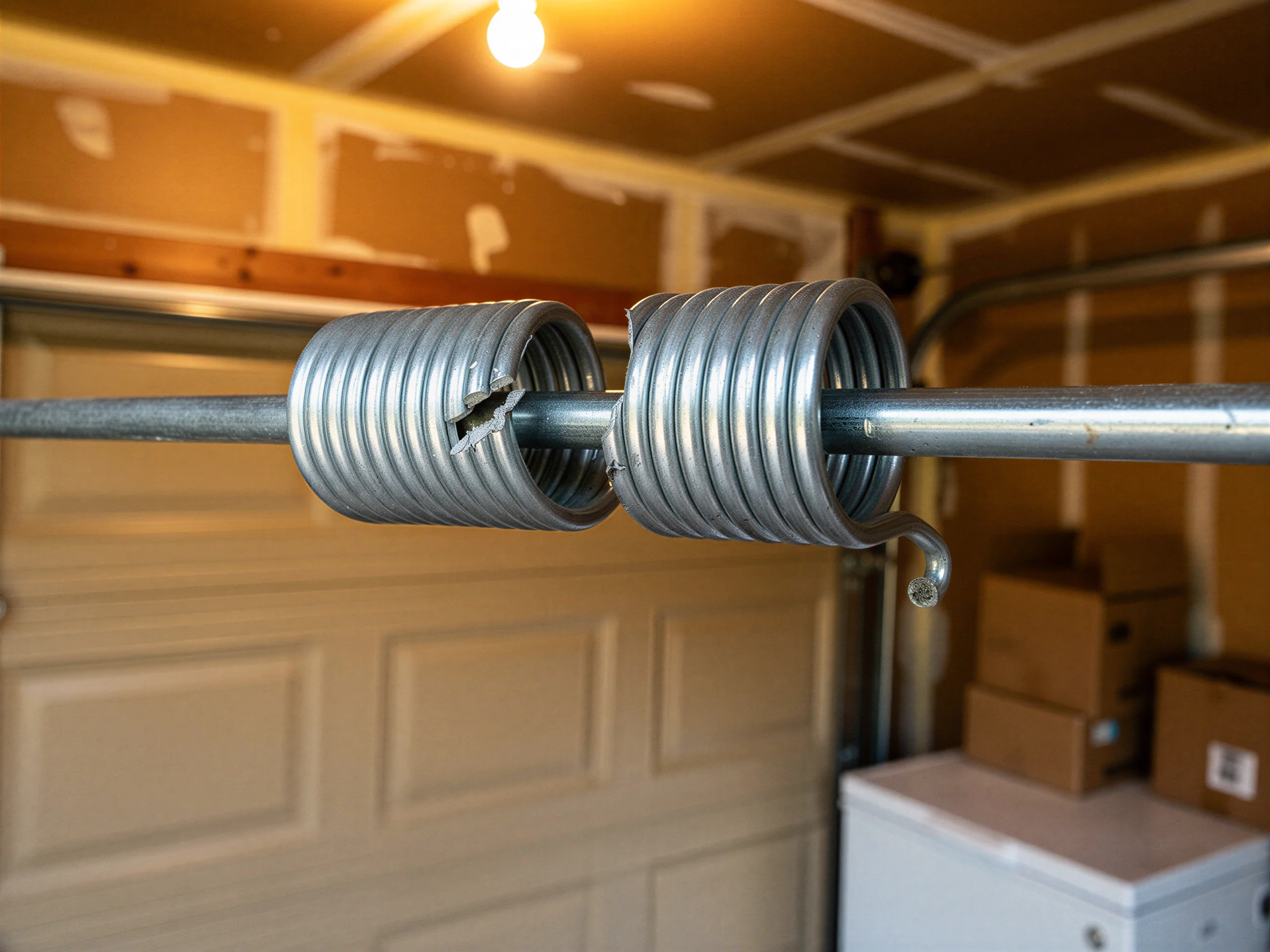
Arizona's heat band is rated severe, and that heat doesn't spare a door built in 2001 just because it's newer than the rest of the service area's stock. Steel expands and contracts every day through the summer, and the torsion spring - the single part doing the most mechanical work on the door - takes that cycling directly. Over twenty-plus years that's a lot of expansion and contraction on the same coil.\n\nNylon rollers on these doors also take a beating from heat-softened grease and dust, and a 16-foot door puts more roller contact against the track than a narrower one does, so wear shows up sooner on the double-wide doors common here. Openers suffer too: circuit boards and capacitors run hotter in a garage that sits in full sun most of the day, and that shortens the life of the board versus a door in a shaded or insulated bay.
The DIY Question
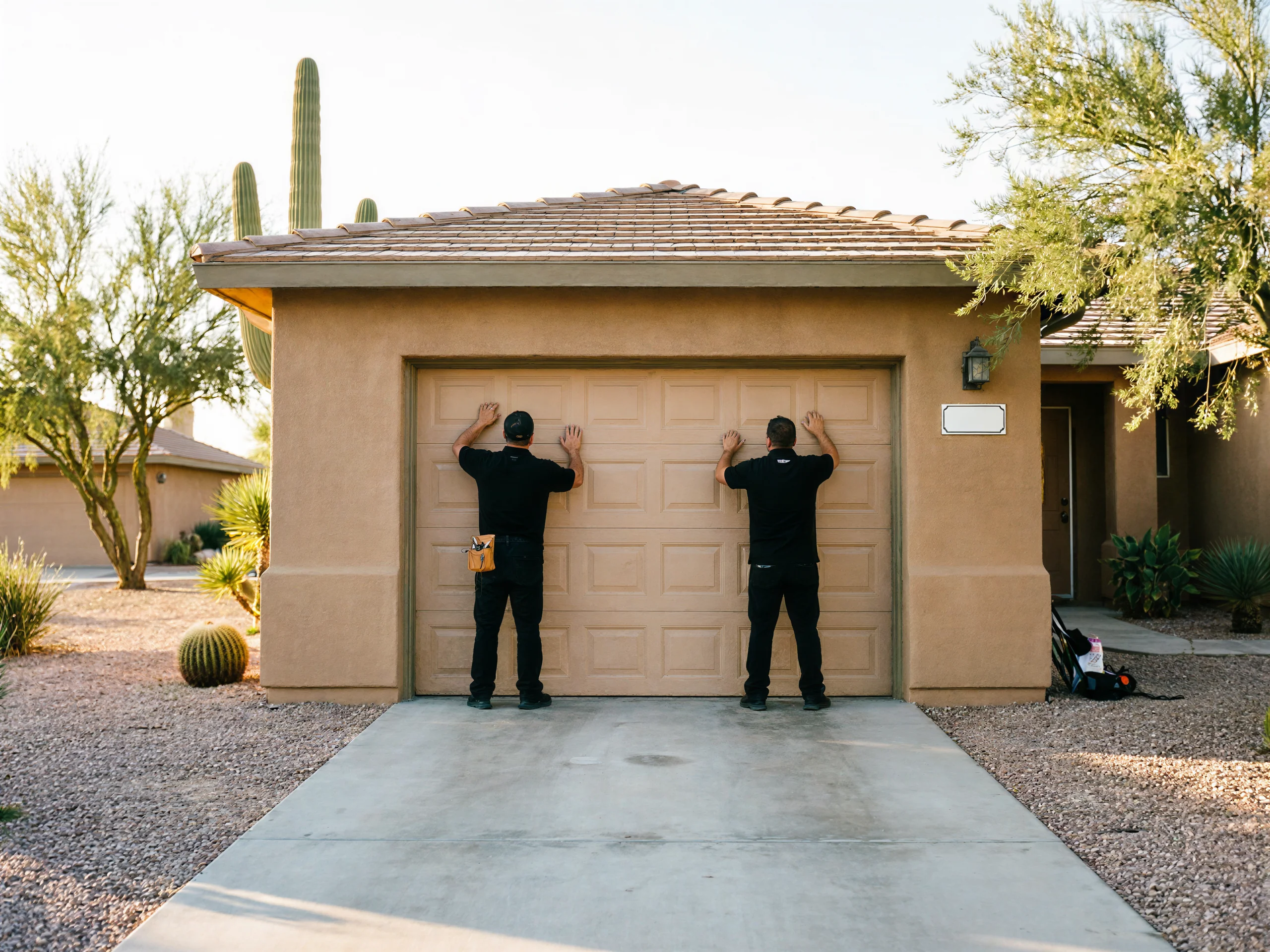
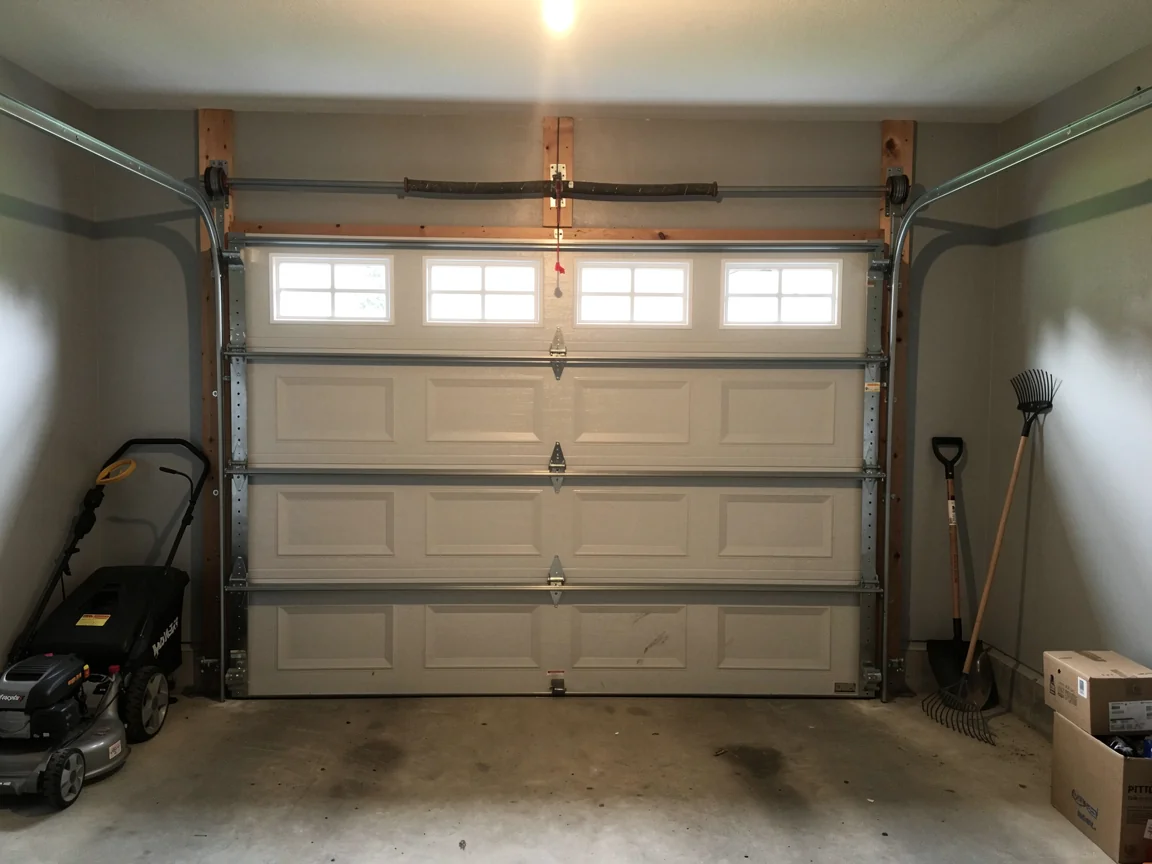
Most houses in Litchfield Park went up around 2001, which means a wide two-car steel sectional door, usually 16 feet across, hung on a torsion shaft mounted above the opening rather than the narrower single-car doors and side-mounted extension springs you'd find in an older part of the service area.
Wide door stores force
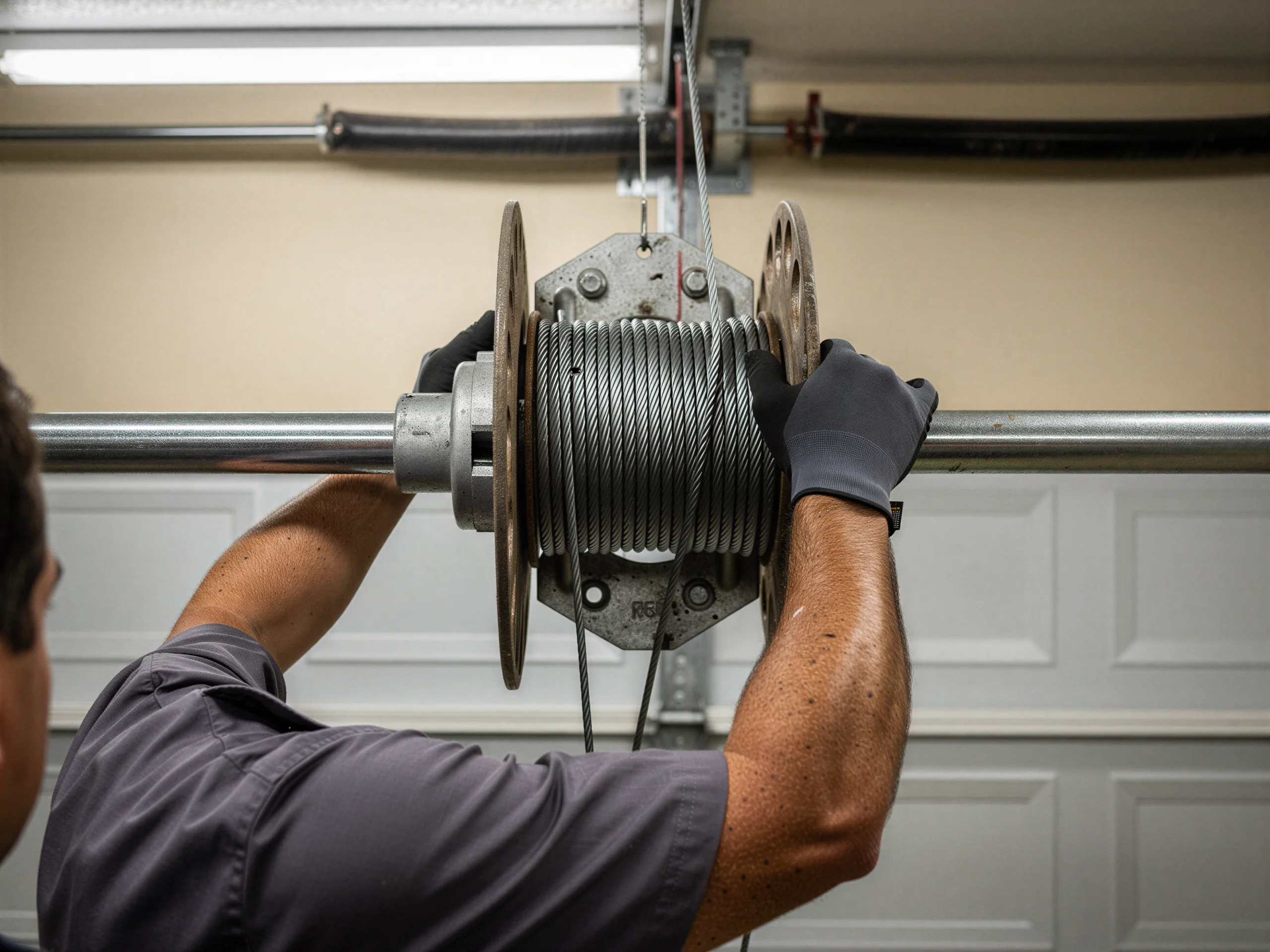
That width matters the moment something breaks. A 16-foot torsion spring under tension holds a lot more stored force than the 8 or 9-foot single-door springs common in older stock, and it's heavier to control if it lets go while you're holding a wrench near it.\n\nIf the door won't open and you can see a gap in the spring coil above the door, or the door dropped suddenly on one side, that's not a tightening job.
Winding needs proper tools
Torsion springs on a door this wide need a winding bar, cones rated for the shaft size, and someone who's done it before. Opener problems are a different story - a dead remote, a sensor knocked out of alignment, a logic board that's stopped responding to the wall button - those you can often check yourself before calling anyone.
Check sensors and remote
Unplug the opener, look at the two sensor eyes near the floor for a solid light on each side, and reset the remote battery before assuming the worst.
The Complications
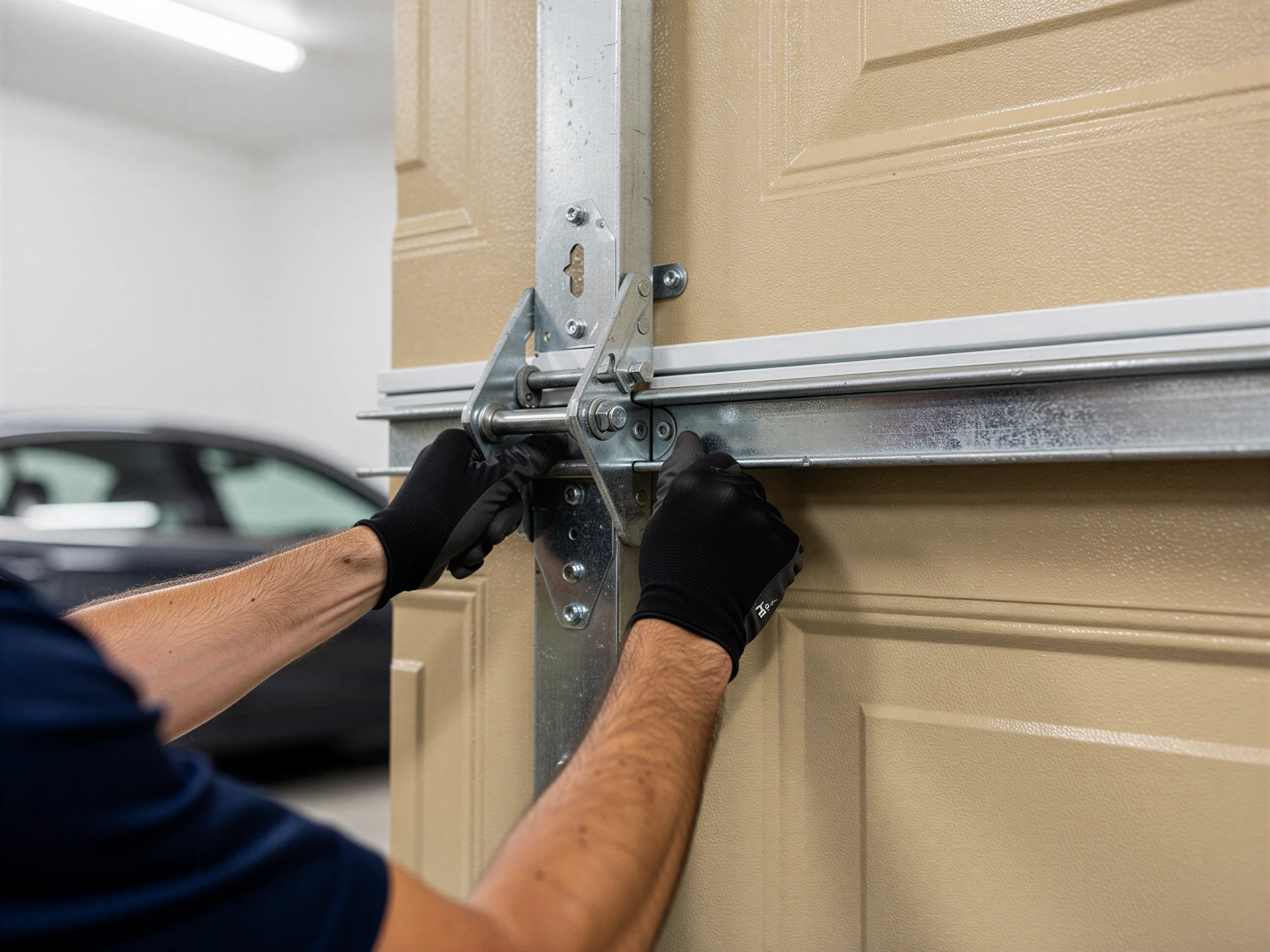
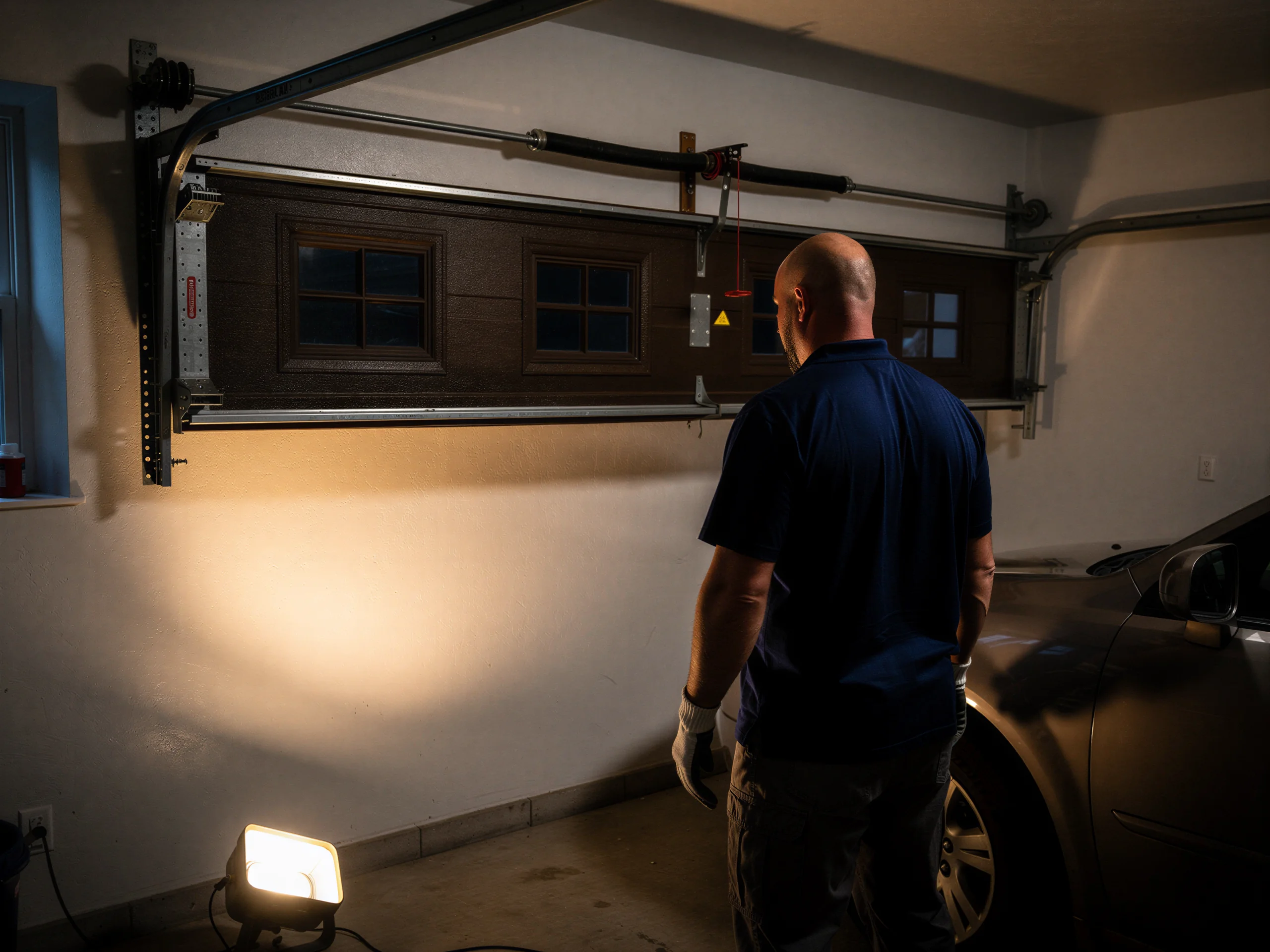
A 16-foot double door that's been sagging or binding for a while sometimes means more than a spring swap - the track can bend under uneven weight, and a bent track on a door this wide isn't worth straightening; it needs replacing. We'll tell you when that's the case rather than patch it and have you call back in a month.\n\nWith a median household income above $120,000 in Litchfield Park, replacement is often the more sensible call here than it would be elsewhere in the service area - a 2001 door nearing the end of its spring and roller life, paired with an aging opener, can cost close to a new door's worth in repeated repairs. We'll lay out both numbers before we start work so you're deciding with real figures, not a guess.
Stocked Parts
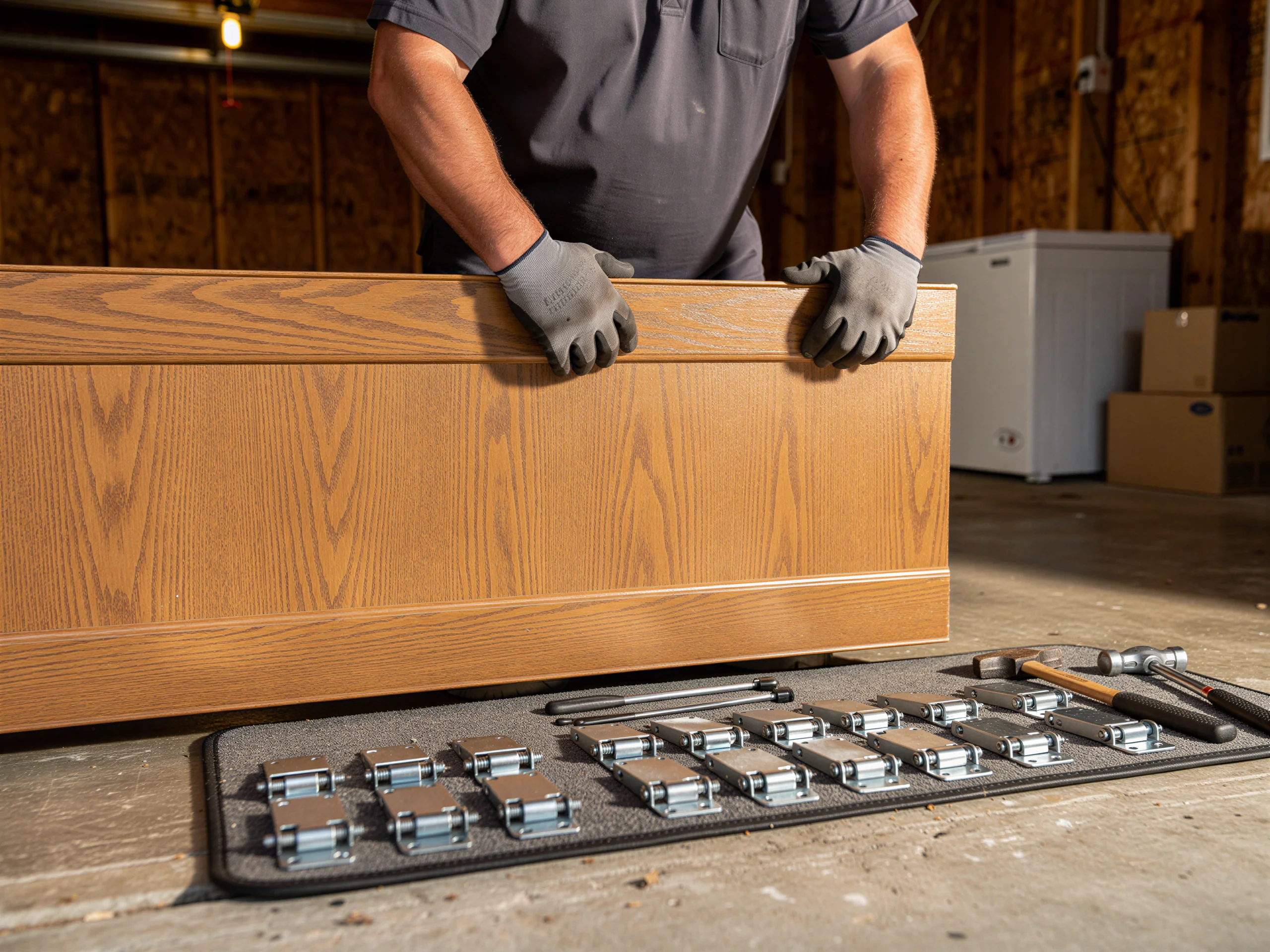
Because Litchfield Park's housing is concentrated in that 2001-era build, the parts we carry out here lean toward double-door sizing: torsion springs for 16-foot openings, extension cable sets matched to that width, and steel rollers sized for the heavier two-car track. We also carry the common sensor and logic board parts for openers from that era, since a board that's run through twenty summers of severe heat is a frequent failure point.\n\nWe don't carry every spring wire gauge or every opener board on the truck - some odd sizes or older discontinued opener models need to be ordered, which can add a day or two before the job's done right. If your door is an unusual width or your opener is a model we don't see often, we'll tell you that on the spot rather than force a part that doesn't fit.
How We Fix It
We run the truck out from Surprise, 13 miles to Litchfield Park, so when we take a call here we bring parts sized for the door we expect to find - mostly 16x7 torsion springs rated for a two-car steel door, not the lighter single-door stock.
Measure before swapping
We measure the wire size, inside diameter, and wind length of the spring before replacing it; guessing on a torsion spring is how a door ends up unbalanced and hard on the opener six months later.\n\nOn the repair side, that means winding down the old spring safely, pulling the cones, and matching the new spring to the door's actual weight rather than swapping in whatever's closest.
Diagnose before replacing parts
On openers, we check the logic board, the sensor alignment, and the drive gear before replacing anything - a lot of 'dead opener' calls turn out to be a stripped gear or a misaligned sensor eye, not a board failure.
Talk to a local pro
Garage door service in Surprise?
Same-day service with honest, upfront quotes.