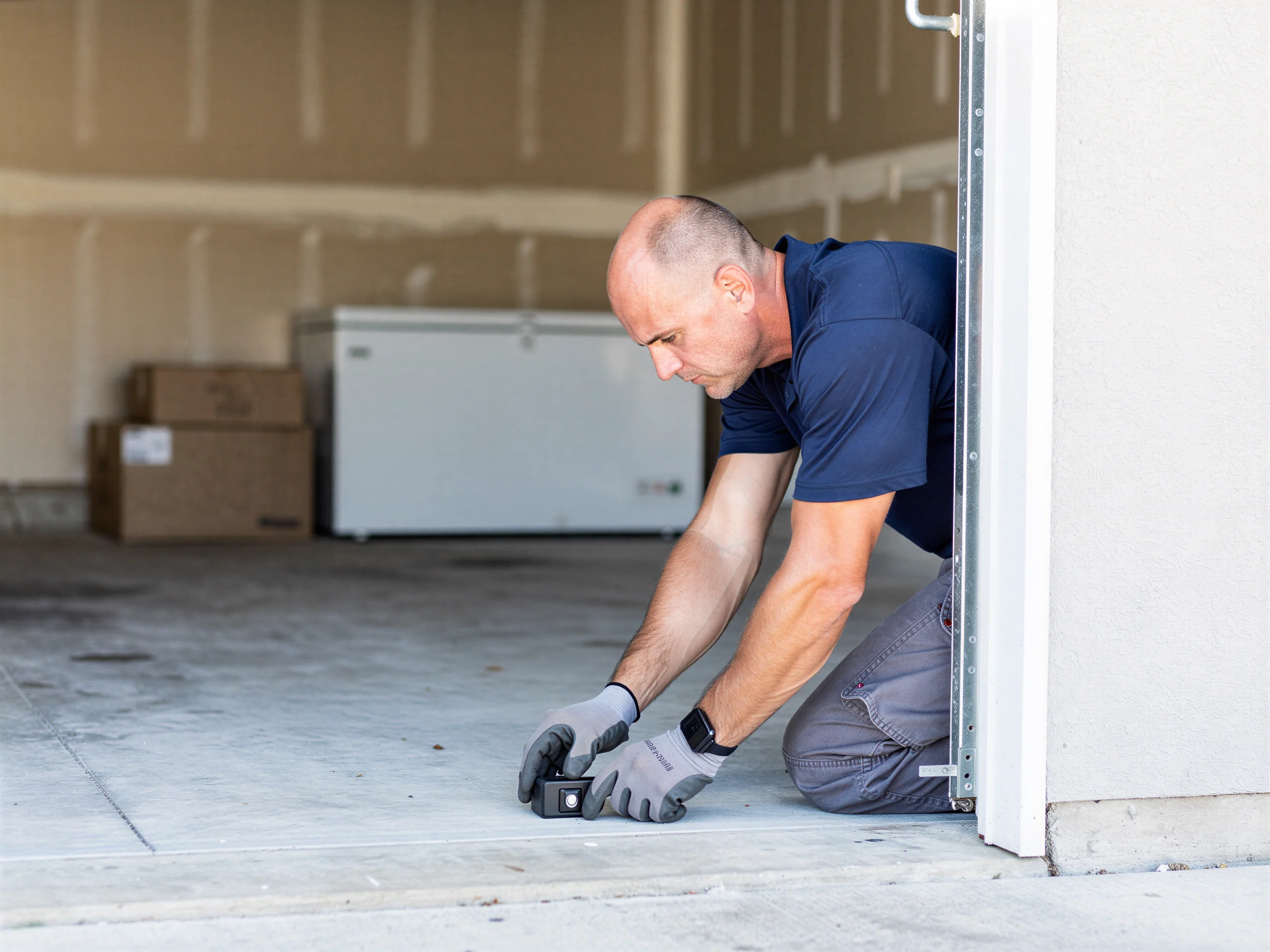
What Causes It Around Here
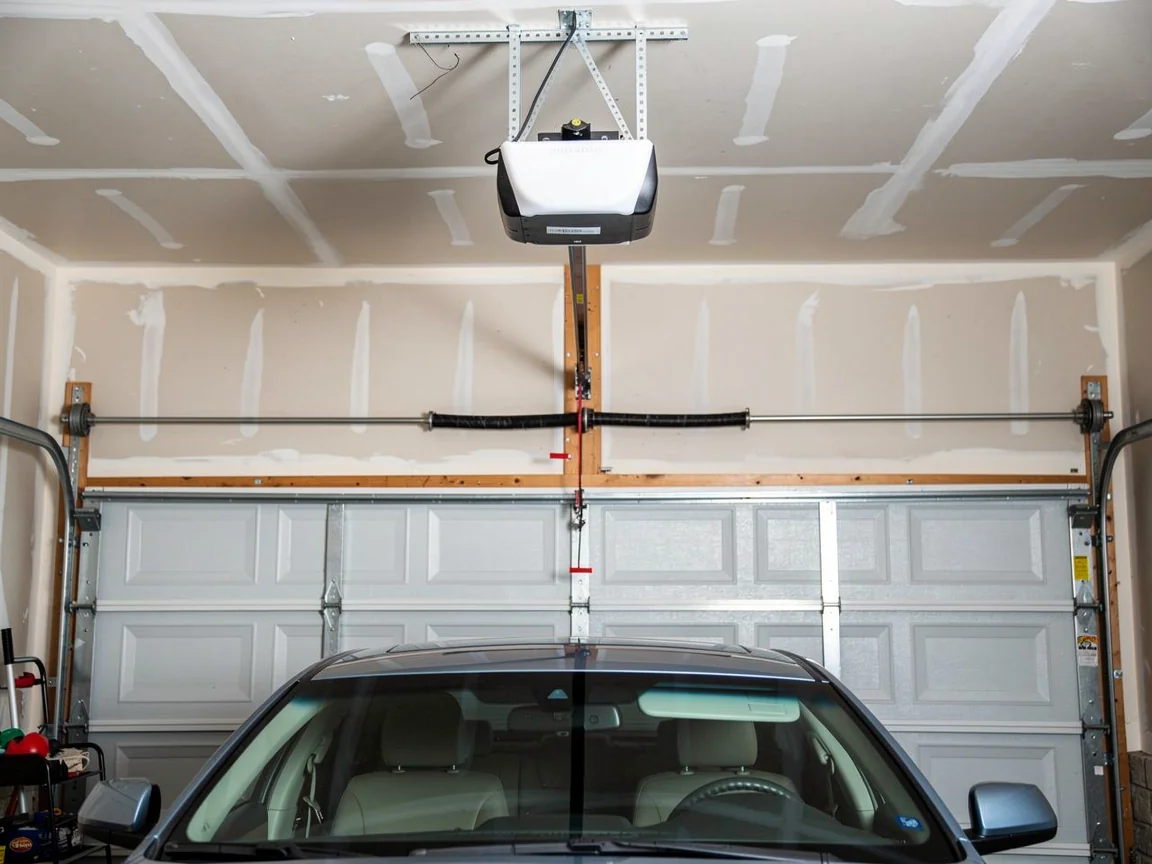
Most of the stock in Litchfield Park went up around 2001, which puts it right at the median for our whole service area and squarely in the 2000s-construction wave that covers seven of the named communities we work in. That means steel sectional doors with factory insulation, torsion springs mounted on a center shaft rather than the older side-mount extension setup, and openers that were already using circuit boards instead of simple relay switches.
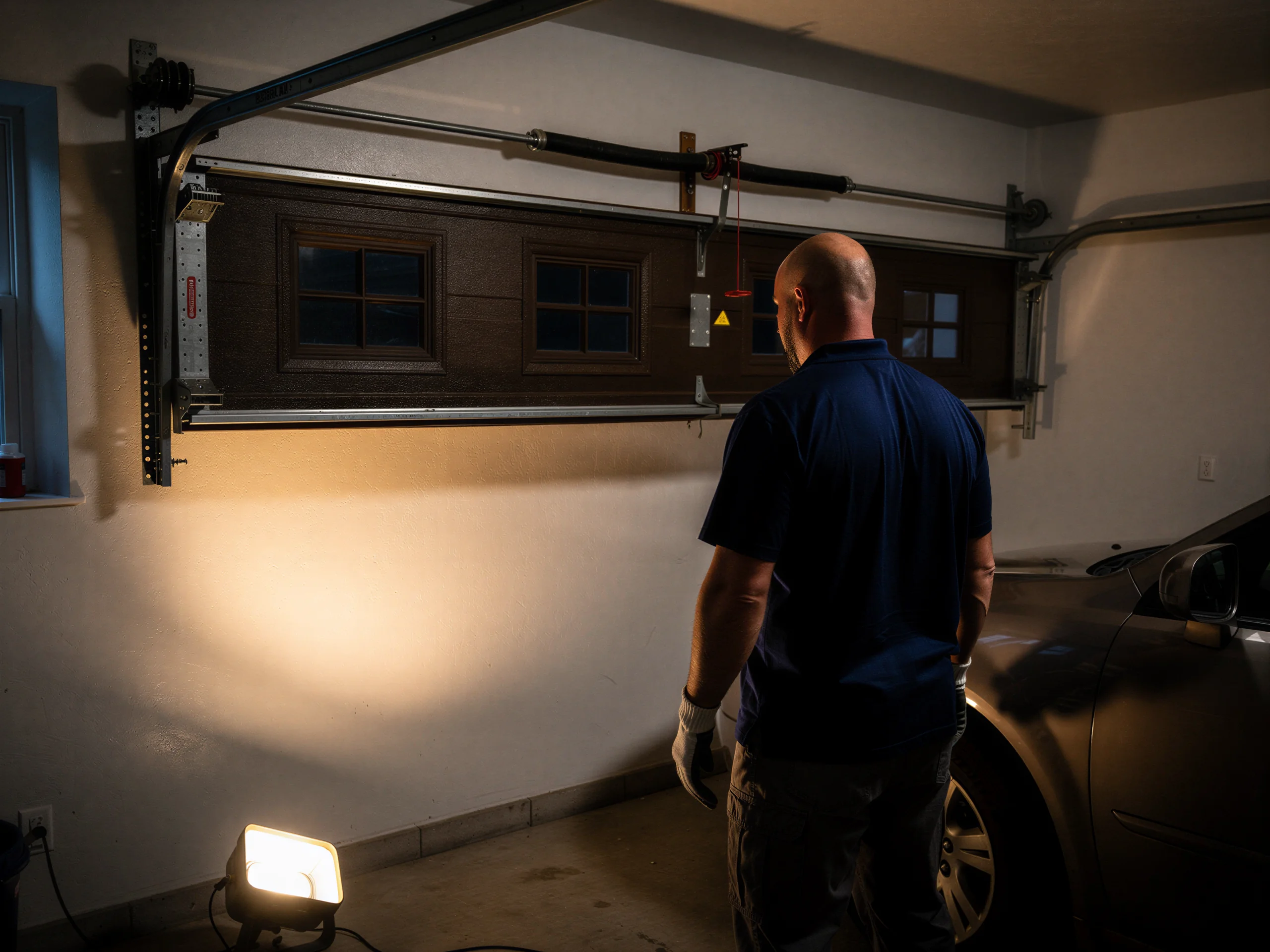
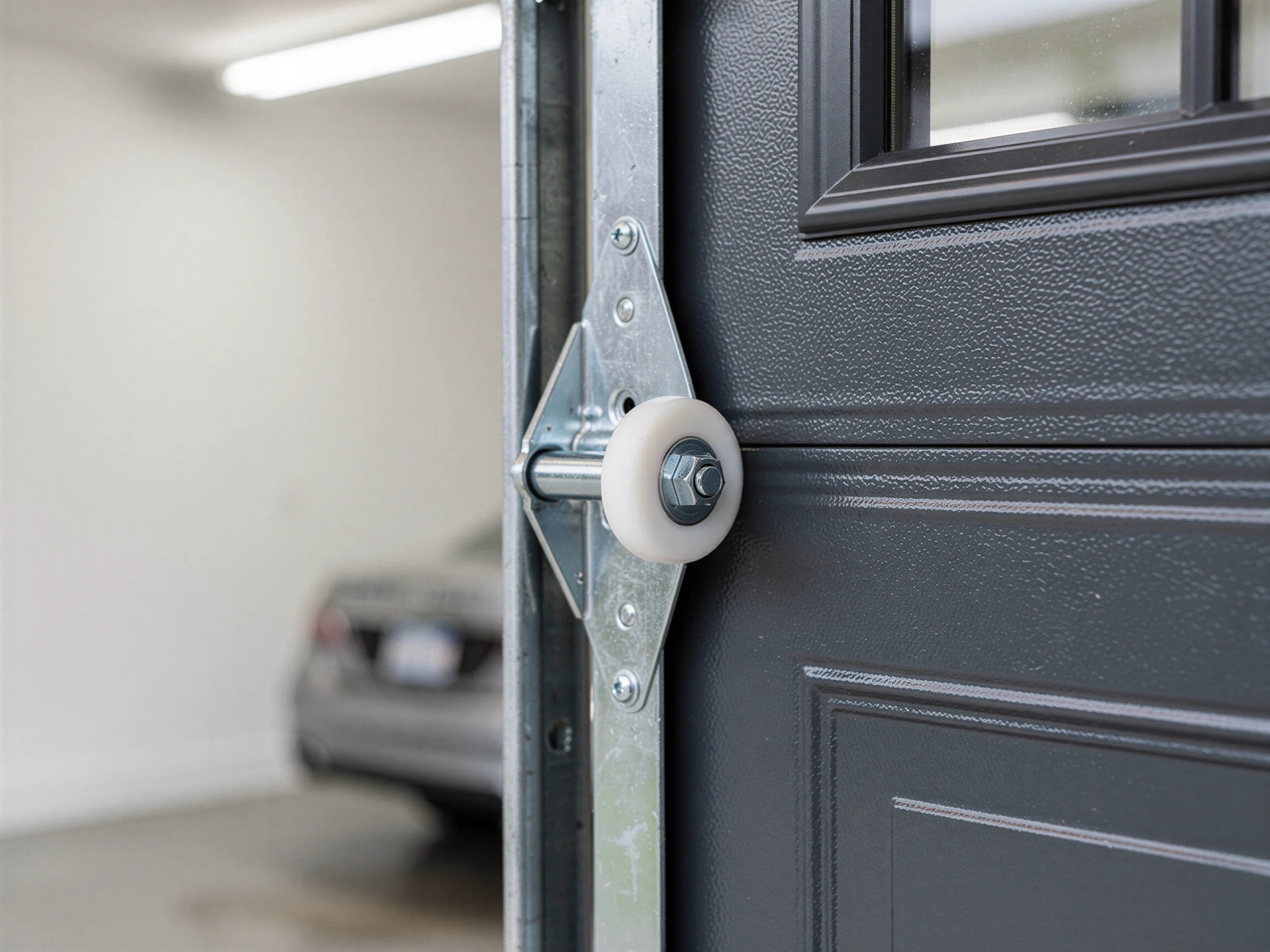
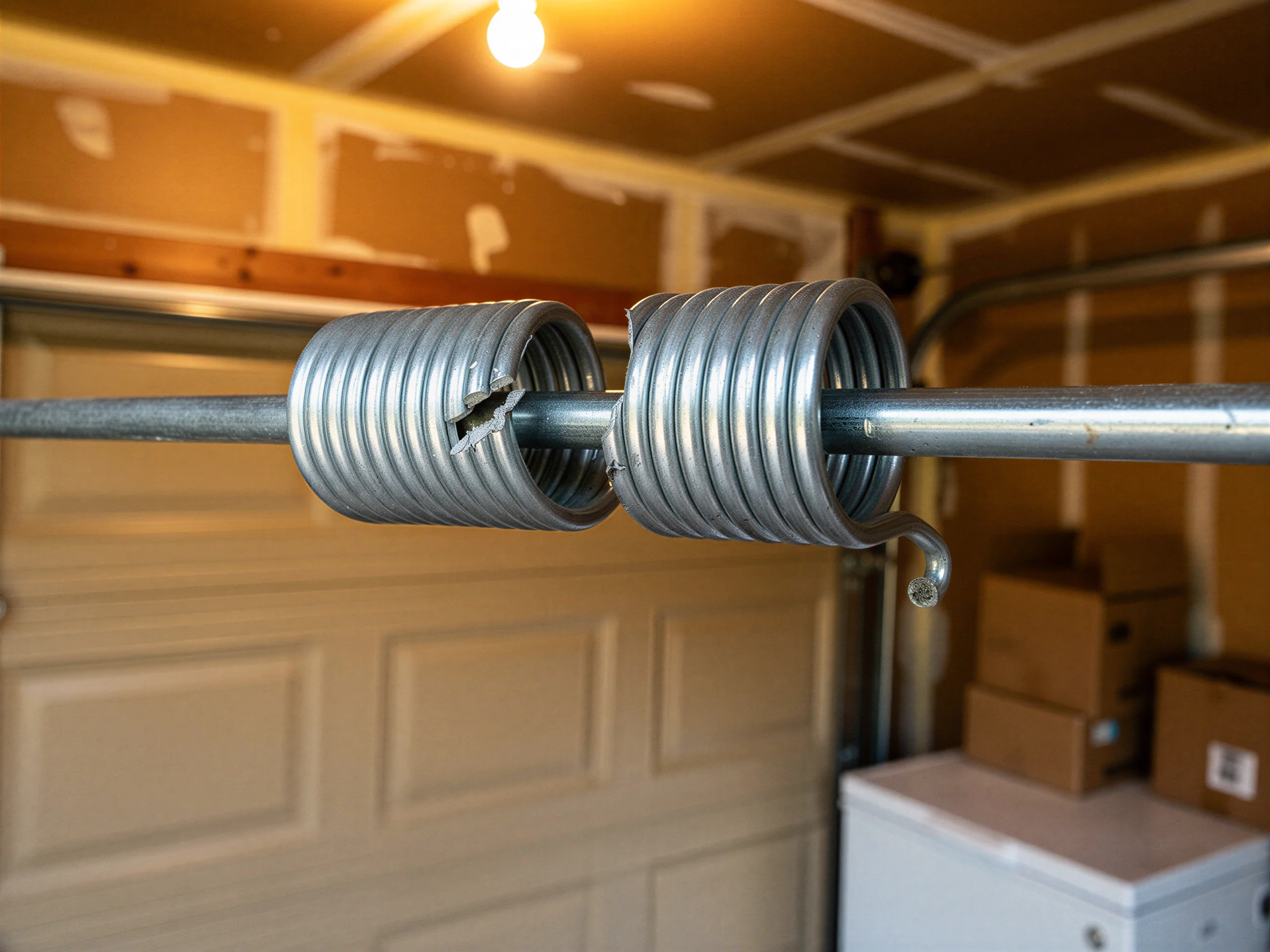
The failure pattern we see from this era isn't rot or warped wood panels, it's wear: torsion springs that have hit their cycle count after two decades of summer use, nylon rollers that have gone brittle, and opener logic boards that finally give out after years of heat cycling. Our climate band here runs severe heat, and that heat is hard on rubber seals, lubricant, and the plastic housings on photo-eye sensors. A door that's 20-plus years old in a severe-heat zone is due for spring replacement whether or not it's broken yet, because the failure, when it comes, is usually sudden and happens under full tension.
The DIY Question
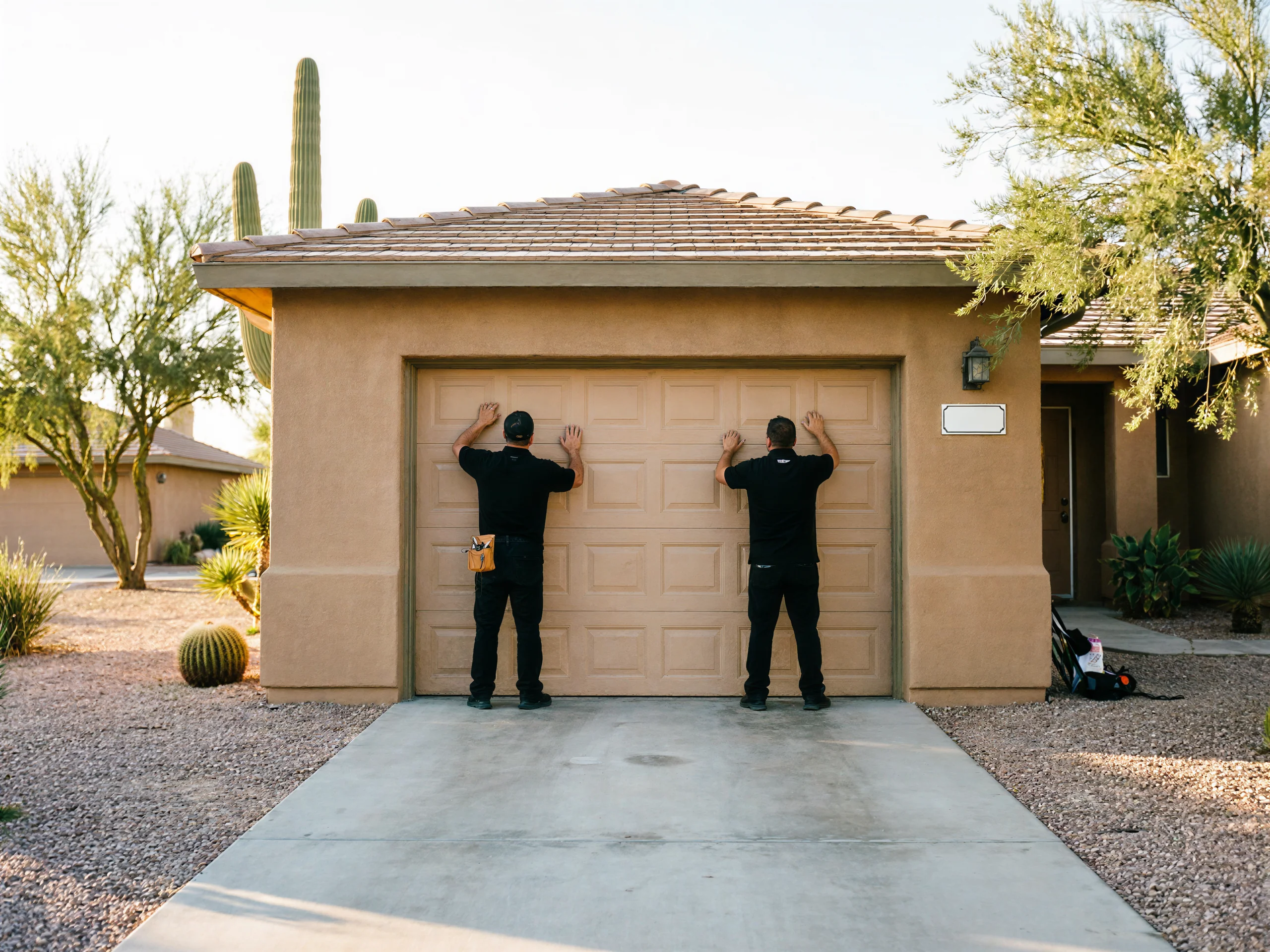
Litchfield Park sits about 13 miles from our Surprise shop, and the first thing that separates this job from a lot of our other calls isn't the drive, it's the house.
Higher income, heavier doors
The median income here runs close to $124,973, well above the roughly $68,472 median across our whole service area. That matters for the DIY question because it changes what's sitting in the garage: a heavier insulated steel door, a belt-drive opener with battery backup, sometimes a smart opener tied into a home system.
Premium doors need pros
Swapping a spring or realigning a track on that kind of door isn't the same project as doing it on a bare steel door with a chain-drive opener from the same era. The springs are often higher-cycle, the opener logic boards are touchier, and a mistake costs more to undo. We're not going to tell you every repair needs a truck.
Safe DIY maintenance tasks
Tightening a loose hinge bolt or lubricating hinges and rollers is fine to do yourself. But torsion spring work, cable replacement, and anything involving the opener's circuit board is where we'd rather you call than guess. One honest limitation: we don't travel to Litchfield Park for same-day emergency calls the way we might closer to Surprise, so if a door is stuck shut overnight, plan on scheduling rather than expecting us within the hour.
The Complications
The honest complication here is distance. At 13 miles out, Litchfield Park is one of the farther points we cover from Surprise, so scheduling a visit takes more lead time than it would for a job a few miles from the shop. We plan routes around that, which means we're not the right call for a true lock-out emergency where you need someone in the next 20 minutes.
The other complication is income-driven, in a good way and a complicating way both: higher-end doors and openers common in this area sometimes use proprietary parts, smart-home integrations, or battery backup systems that take longer to diagnose than a standard chain-drive setup. We'll walk you through what we find before we replace anything, and if a part needs to come from the manufacturer rather than our stock, we'll give you a timeline as soon as we know it instead of guessing.
Stocked Parts
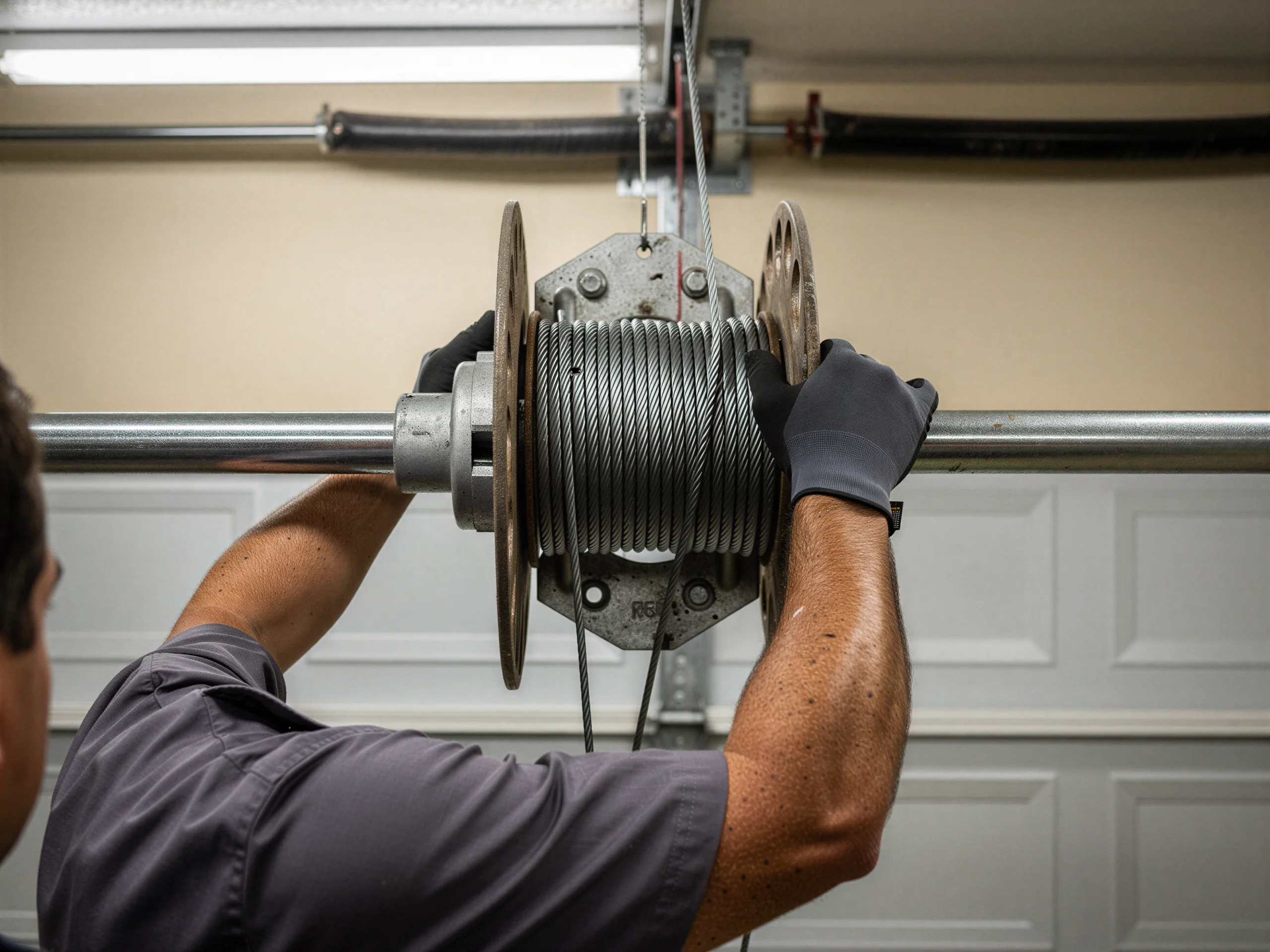
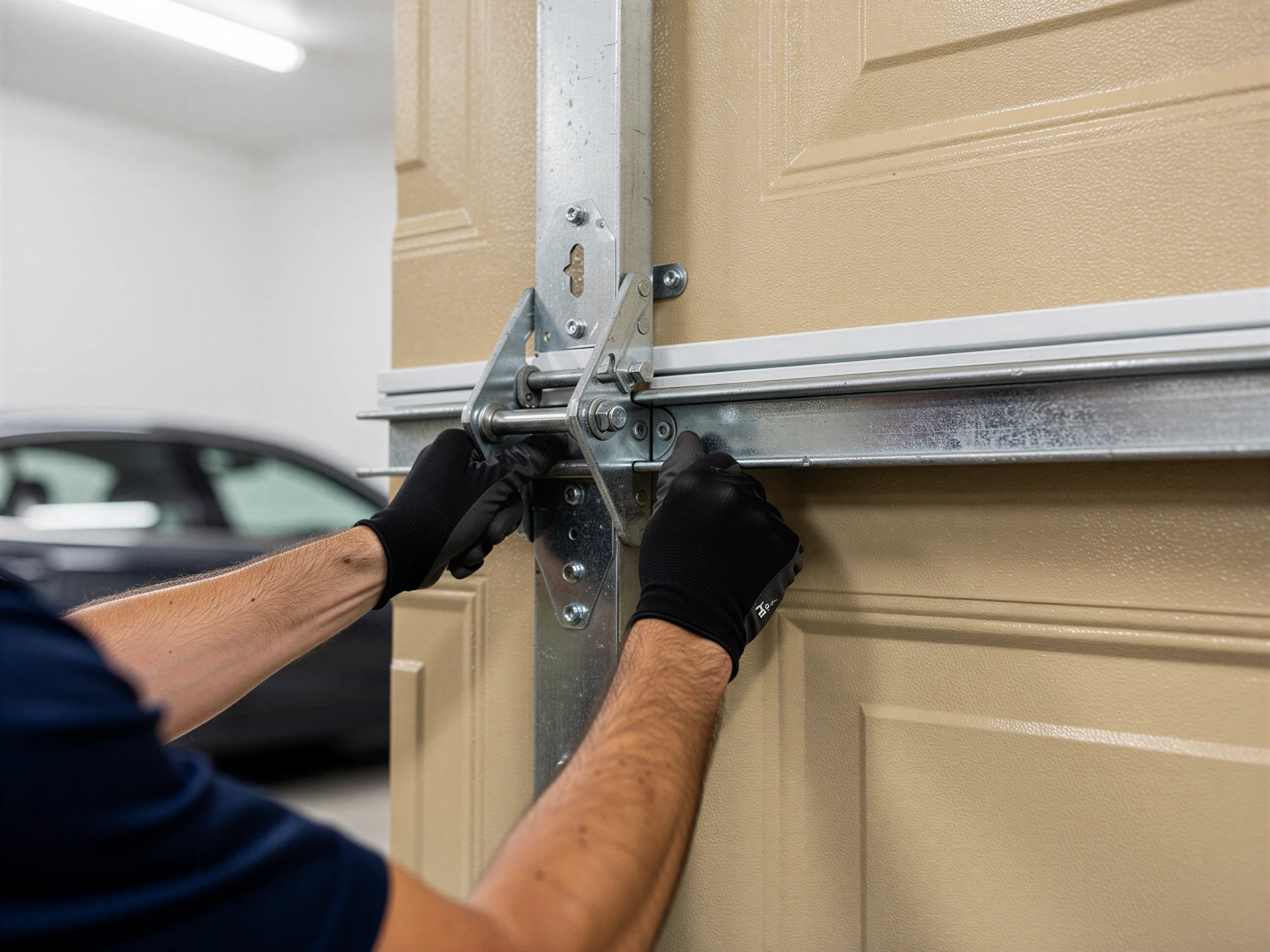
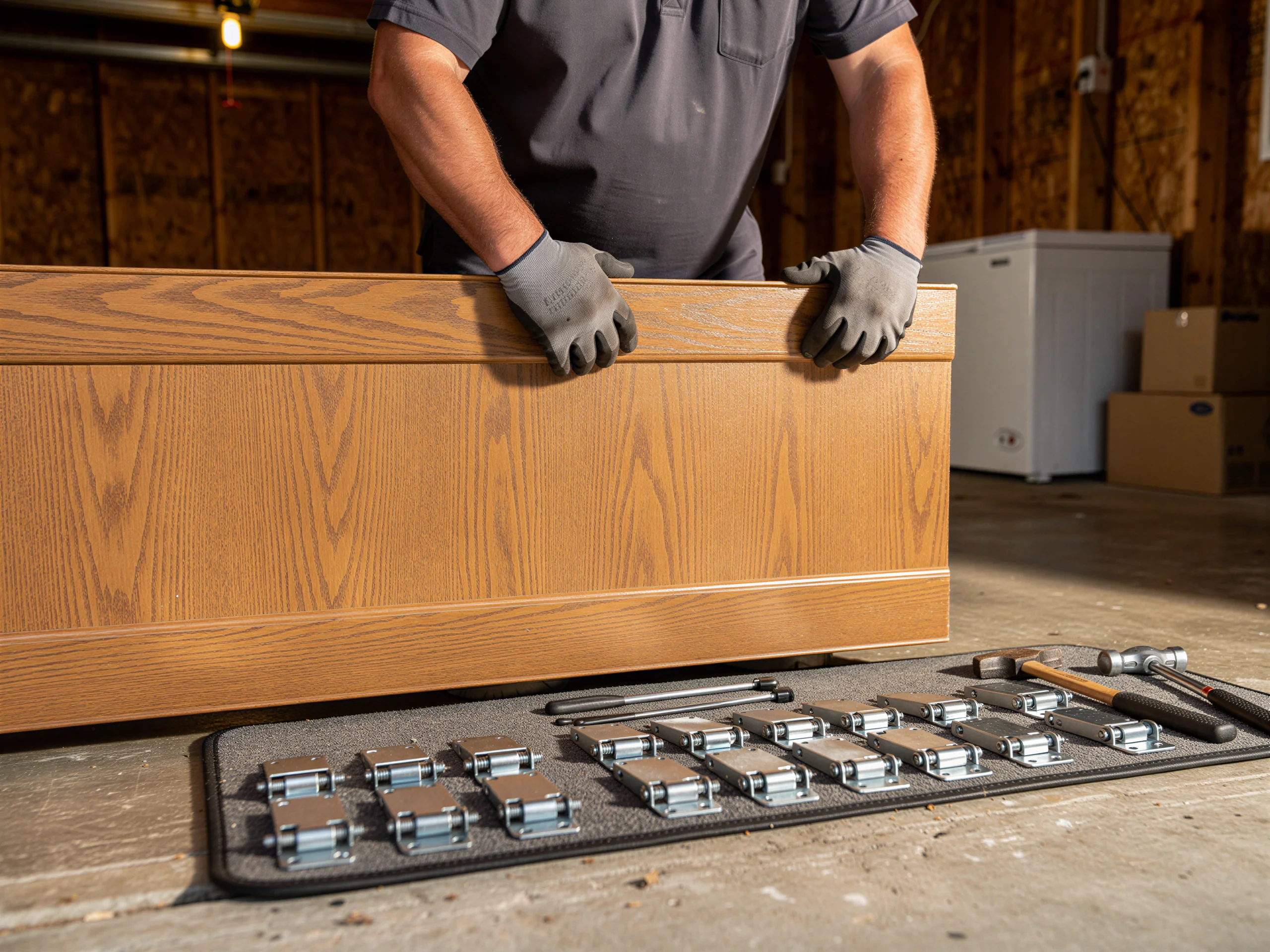
We carry torsion springs sized for the standard single and double door weights common to 2000s-era construction, since that covers most of what we see in this part of the service area. Nylon and steel rollers, standard-width track sections, and cables for both torsion and extension setups are on the truck for most calls.
Where we don't carry stock is opener boards specific to a single builder-installed brand from that era. If your opener's logic board has failed and the model is an older proprietary one, that part sometimes has to be ordered, and we'll tell you the lead time once we've identified the model rather than promising a number we don't have. For most spring, cable, and roller jobs, though, the parts are on hand and the repair happens in one visit.
How We Fix It
For a 2001-era door, the job usually starts with the torsion spring system, since that's the part most likely to have reached end of life.
Spring matched to lift
We match spring wire size and wind to the door's weight and the opener's lift capacity rather than guessing at a stock size, because a mismatched spring either strains the opener or won't hold the door open safely. On the opener side, boards from this build era are old enough that replacement is often simpler and more reliable than trying to source a matching circuit board.
Board replacement over patching
We'll tell you straight when that's the better move instead of patching a dying board with a new capacitor. Track and roller work is usually straightforward: these doors run on standard track widths, and realignment or roller swaps don't require anything unusual.
Early builder opener parts
Where it gets slower is parts that were specific to a builder-grade opener model sold heavily in the early 2000s. Those sometimes take longer to source than a generic replacement, and we'll say so before we start rather than after.
Talk to a local pro
Garage door service in Surprise?
Same-day service with honest, upfront quotes.