What Causes It Around Here
Heat is the big one. Summer temperatures here run in the severe band, and steel panels expand and contract through that swing every single day for twenty-plus years. By the time a door is in its twenties, the factory insulation bond between the steel skins has usually started to let go at the edges, and that's when a panel that looks fine suddenly dents on contact instead of flexing back. A door that would have shrugged off a basketball at year five folds at year twenty.
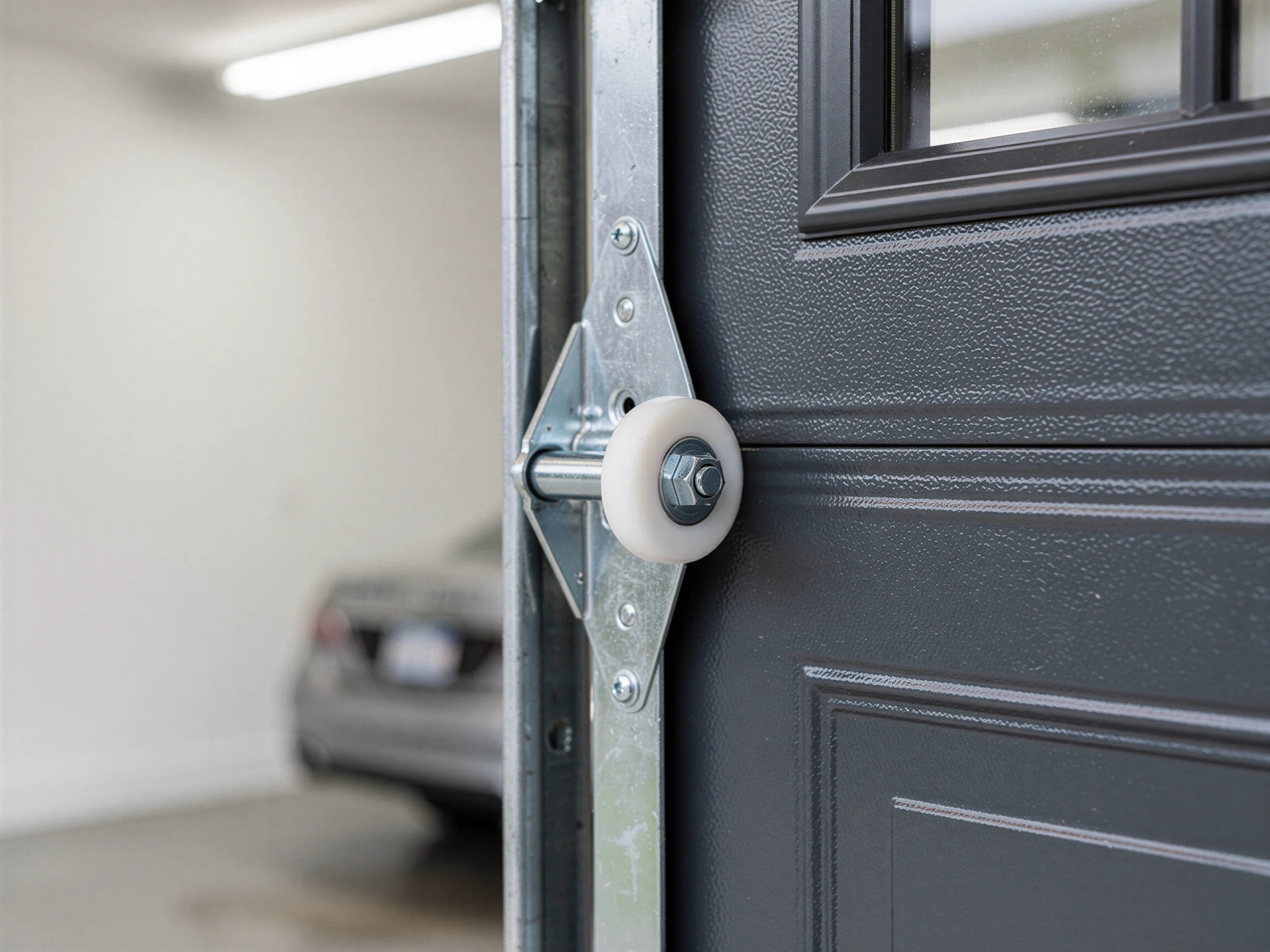
The other common cause is simple impact - a trailer hitch backed in wrong, a bike pedal clipped on the way past. On a 2001-era steel door, a dent in one panel rarely stays isolated. The panel seams run the full width, so a hard hit near the edge can tweak the roller track on that side too, and now you've got binding on top of the dent. We see that combination often enough on doors from this build window that we check the track alignment on every panel call, not just the panel itself.
The DIY Question
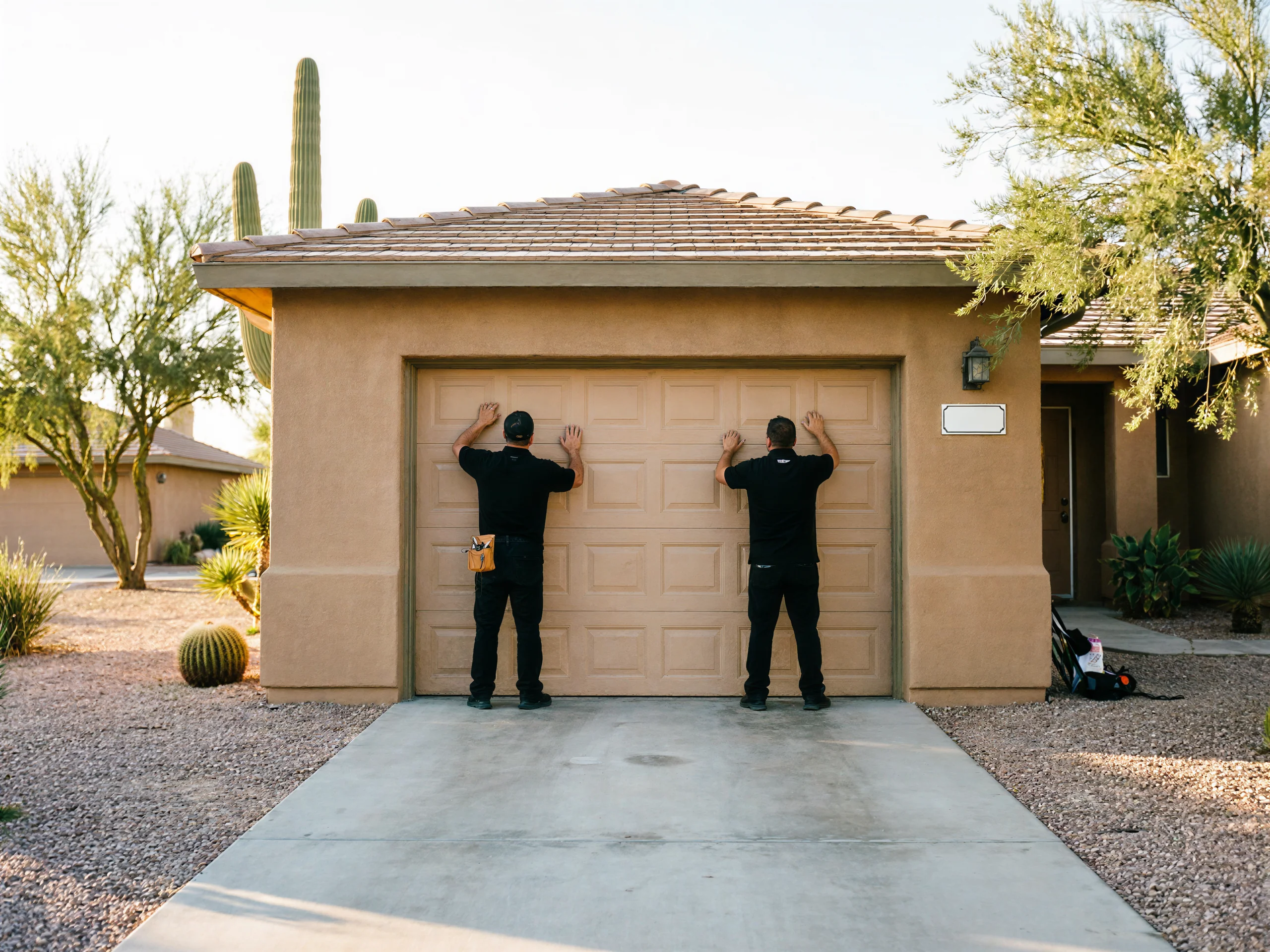
Most of Litchfield Park went up around 2001, and that year matters more than people think when a panel gets cracked by a car bumper or caved in by a storm gust.
Foam sandwich construction
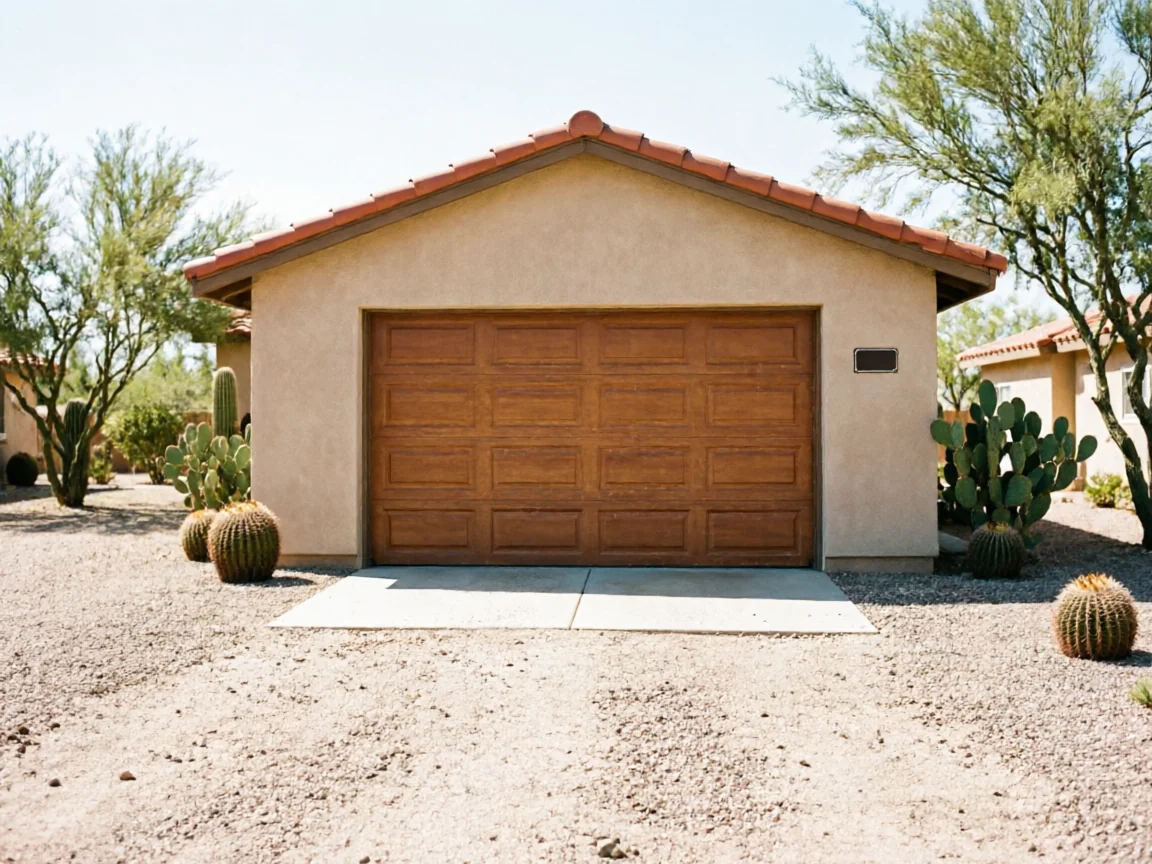
Doors from that build era are steel, usually with a raised long-panel profile, and a lot of them shipped with factory foam insulation sandwiched between two steel skins. That sandwich construction is not something you pry apart with a pry bar and a Saturday afternoon.
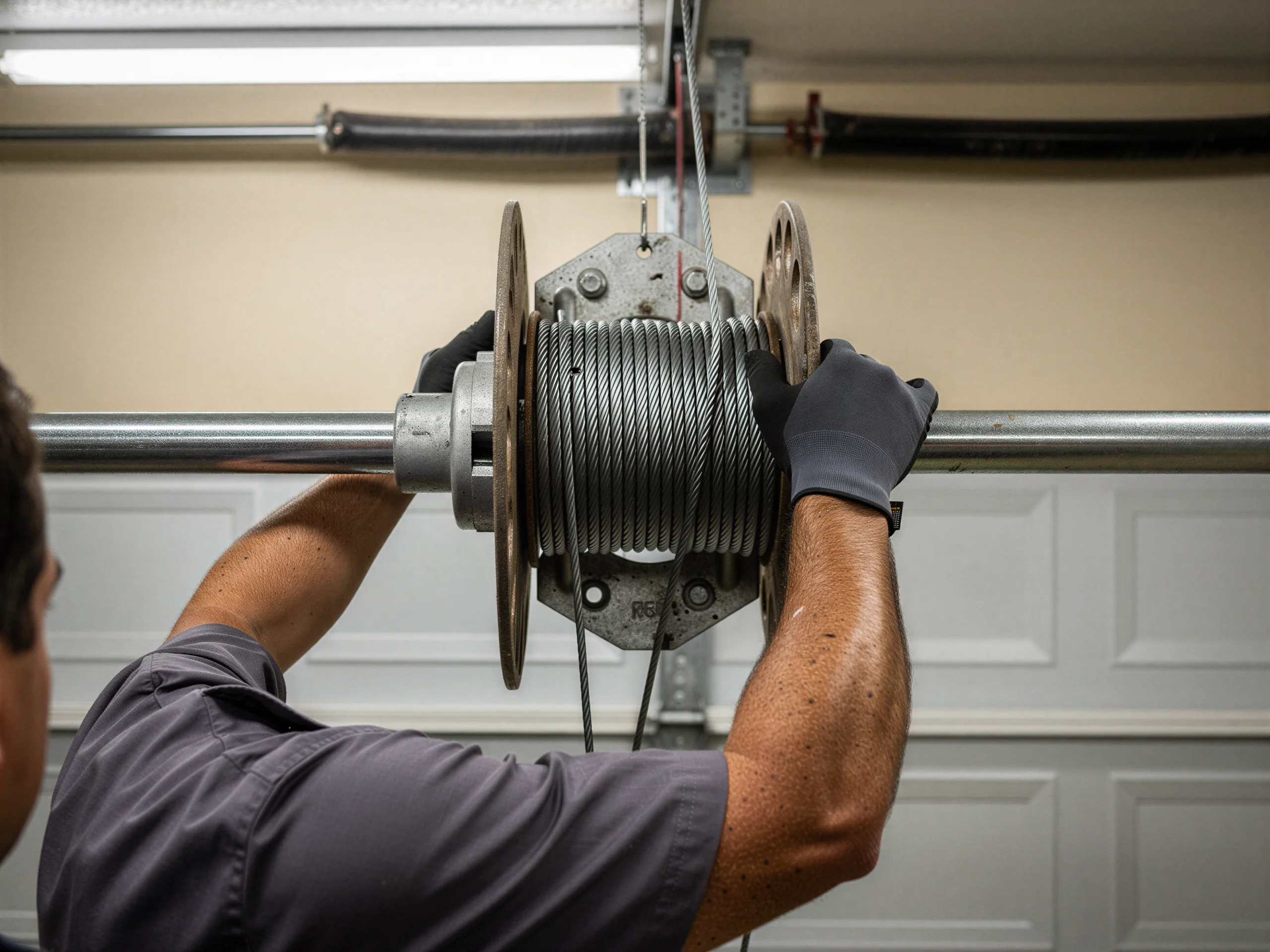
Tension at hinge points
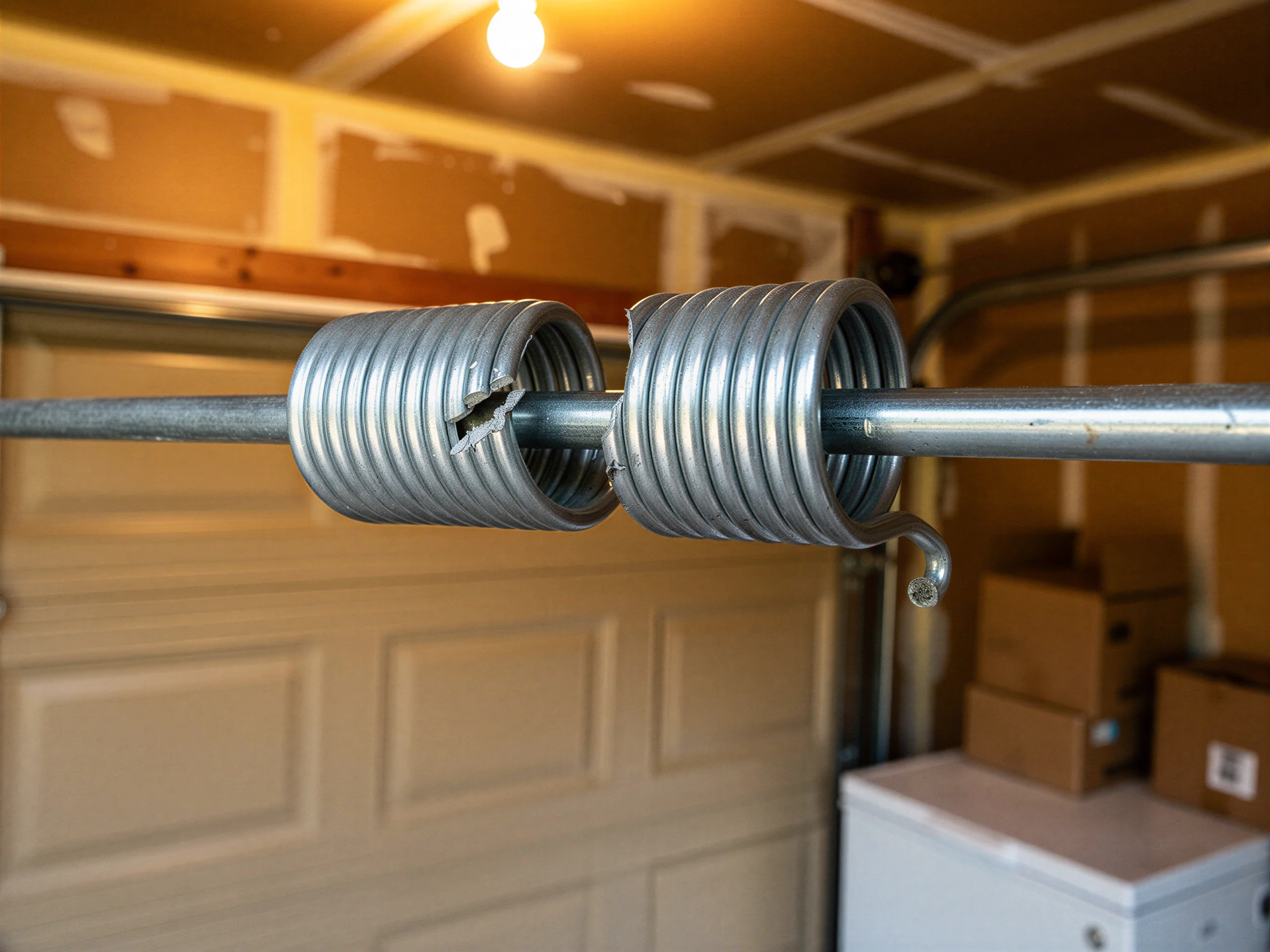
The panel is riveted or bolted to the stile, the hinge points carry spring tension, and on a double-wide door that tension is not trivial. If it's a single bottom panel with no visible warp to the track, a confident DIYer with the right bolts can sometimes manage it.
Matching width and ribs
But matching the exact panel width, the rib spacing, and the insulation core from 2001 production runs is the hard part, not the wrench work. Order the wrong width and the door won't track straight, and you'll be pulling it back off in a week. We'd rather you call and tell us the make stamped on the inside of the door than guess and buy twice.
The Complications
The honest limitation: if your door is old enough or obscure enough that the manufacturer has discontinued that exact panel profile, we're not going to pretend we can match it.
Replacement beats shade mismatch
On a door from the early 2000s that's been sun-baked for two decades, sometimes the straight answer is that full door replacement costs less and looks better than chasing a panel that's a slightly different shade of white than the rest of the door.
Aluminum trim weathers differently
Aluminum-trim doors from this same era complicate things further - the trim pieces dent and oxidize at a different rate than the steel panel behind them, so a panel swap can leave a visibly newer section next to weathered trim. We'll point that out before we order anything, not after you've paid for the part.
Special orders need return
And because this is a 13-mile run from our Surprise base, a panel that turns out to need a special order means a second trip, not a same-day fix. We'd rather tell you that up front than have you waiting on us.
Stocked Parts
With roughly 2,867 households in Litchfield Park clustered in that same 2001-ish build window, the panel widths and rib patterns repeat often enough that we keep common sizes on the truck rather than ordering blind every time. Standard steel long-panel sections in the usual 7-foot and 8-foot door widths are the ones we're most likely to have on hand.
What we don't stock are the insulated wood-overlay panels. At a median household income of $124,973 here, a fair number of these doors were originally ordered with the upgraded insulated core and a composite overlay rather than bare steel, and those panels are special order through the door manufacturer, not something any garage door outfit keeps sitting in a warehouse. If your door is one of those, expect us to quote the job and come back once the part lands rather than finishing same-visit.
How We Fix It
We come out from Surprise, about 13 miles, and because that's a drive rather than a next-door call, we schedule panel work in batches where we can rather than treating every ding as a same-hour emergency.
Pulling and swapping panel
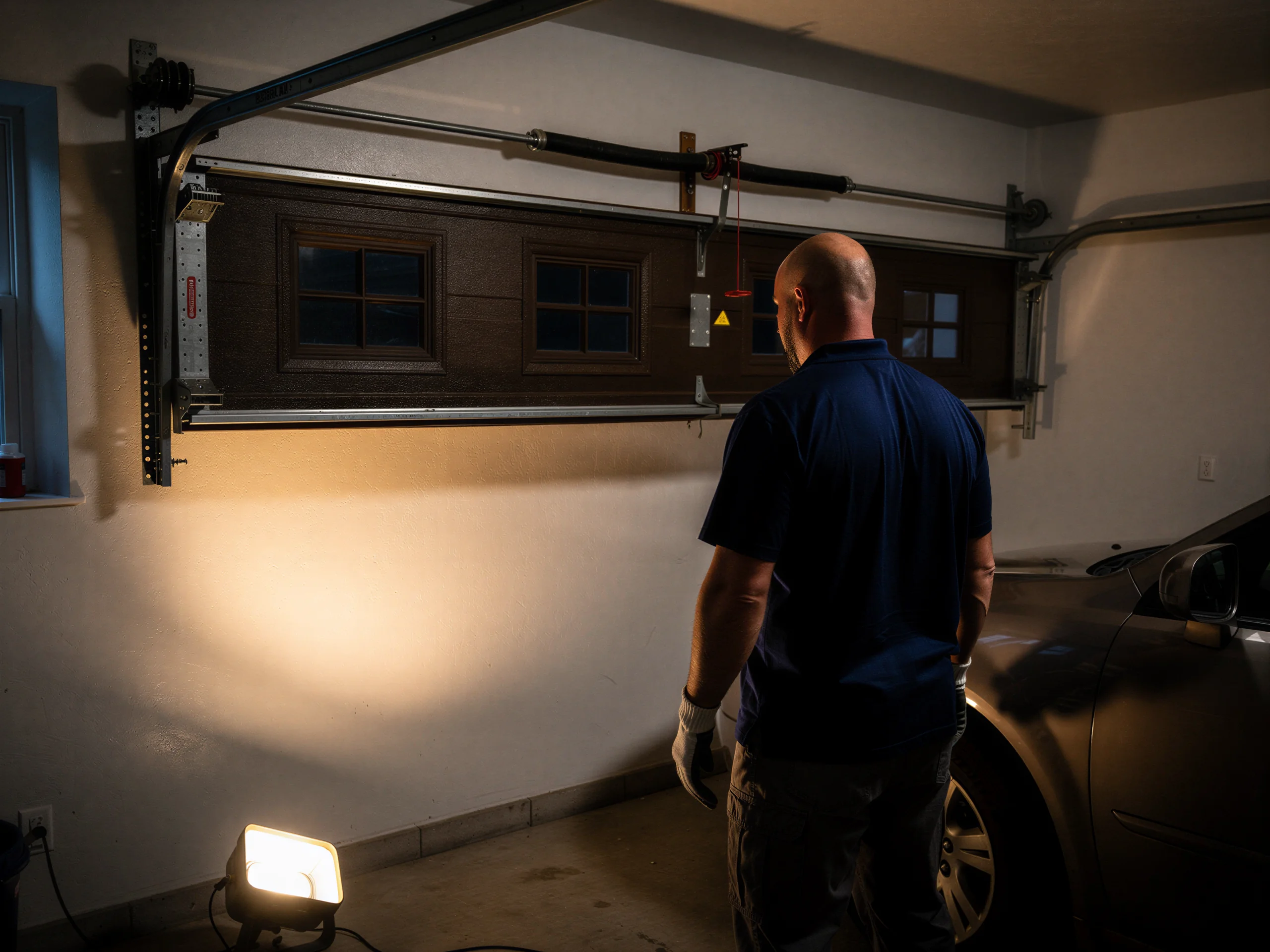
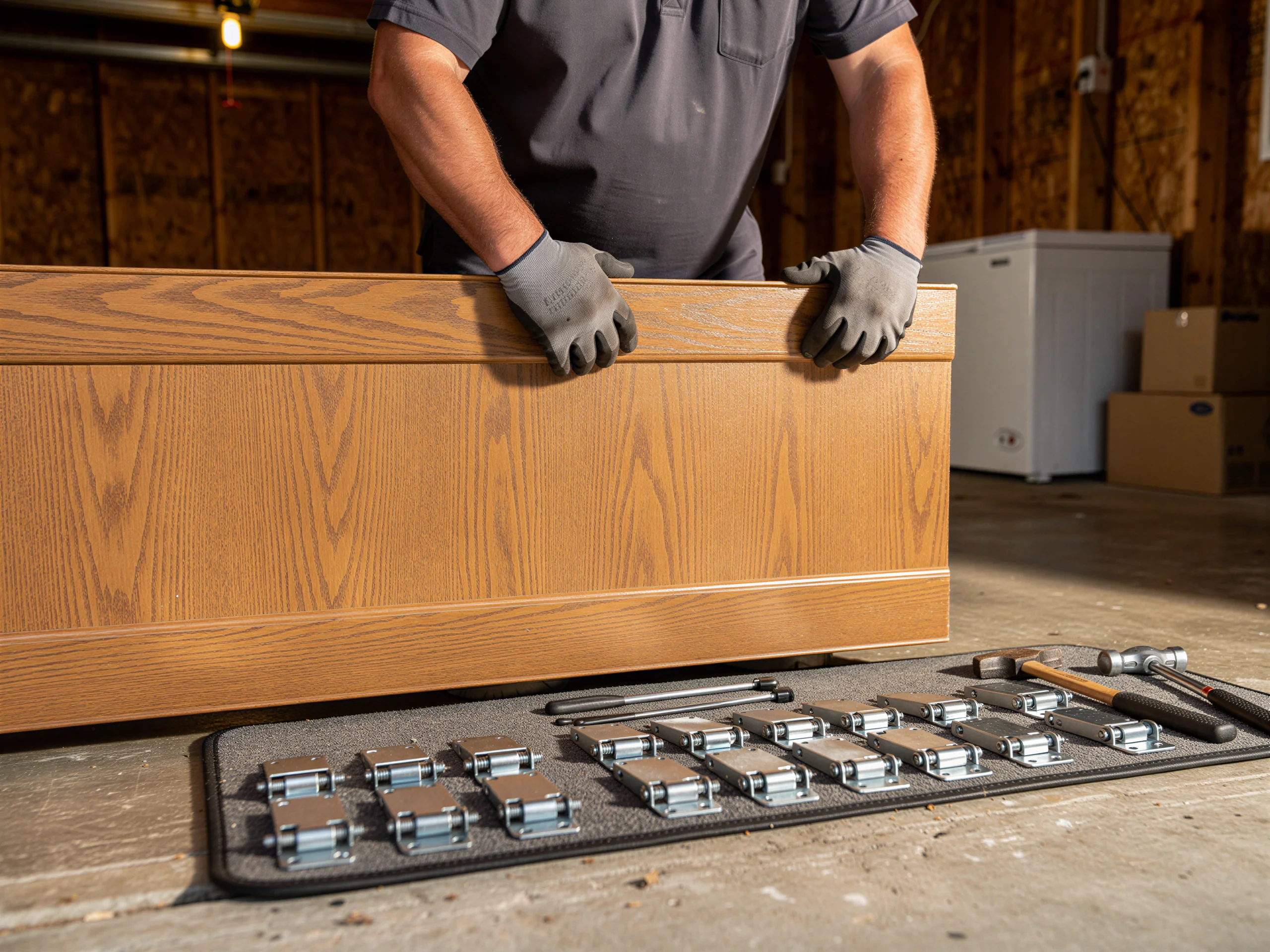
For a single damaged panel, we pull the door, support it on the track, unbolt the hinges on either side of the damaged section, and swap in the matching panel before resetting tension and rehanging.
Checking neighboring stiles
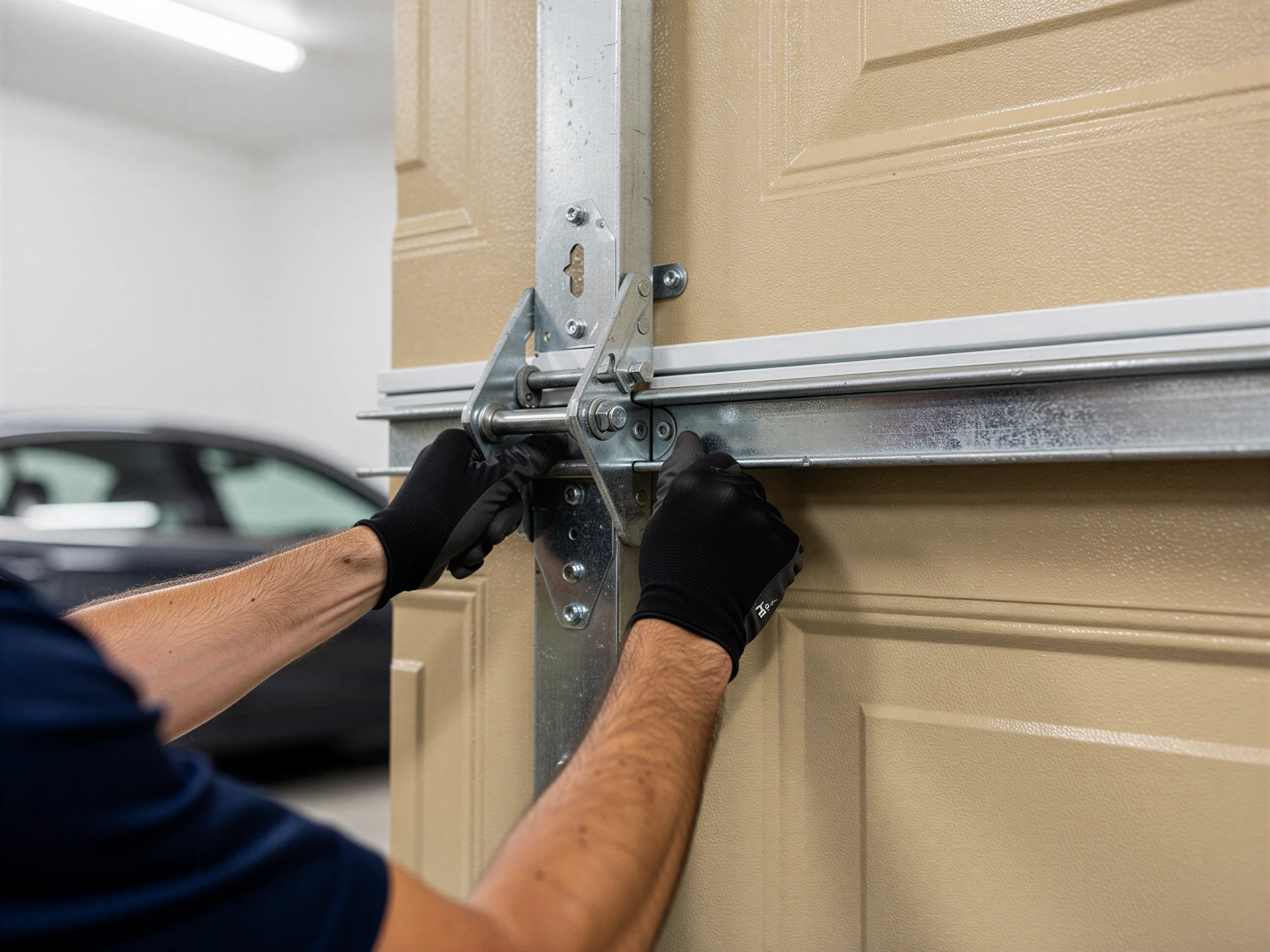
We check the opposing panels and the end stiles while we're in there, because a hit hard enough to deform steel often knocks the hinge brackets out of square too, even if you can't see it from the driveway. If the door is a double-wide, we also recheck the center support since that's where sag shows up first on a door that's had one section weakened.
Refinish requires special order
What we don't do on this call is repaint or refinish mismatched panels to a custom color on-site - if your door has a wood-look overlay or a specialty finish, that panel often needs to be special-ordered painted, not touched up with a spray can in your driveway.
Talk to a local pro
Garage door service in Surprise?
Same-day service with honest, upfront quotes.