How We Fix It
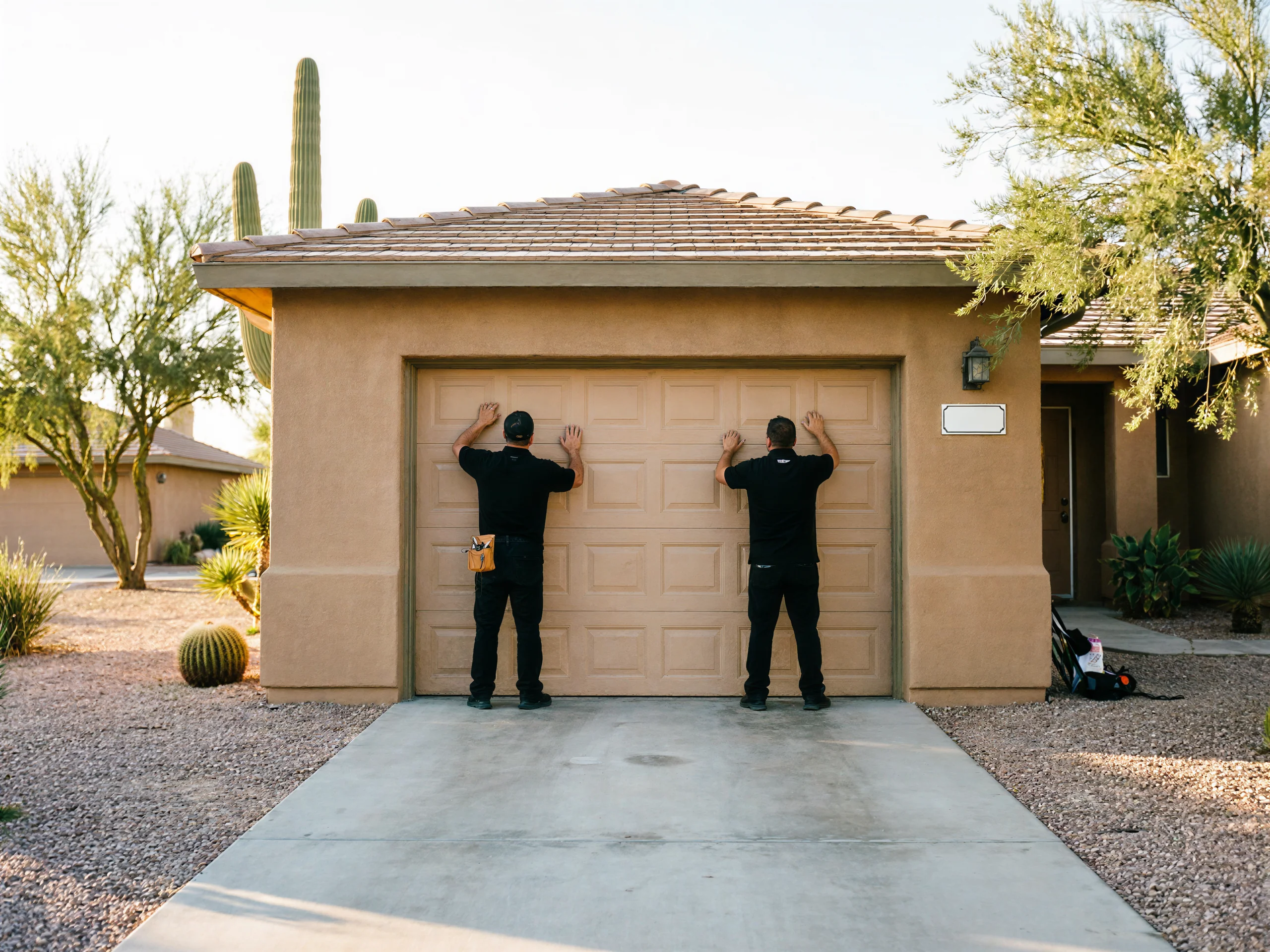
Most Tolleson houses went up right around 2001, which lines up with the broader service area's median build year of 2001 and a stock mostly dated 1979 to 2005.
Standard setups we handle
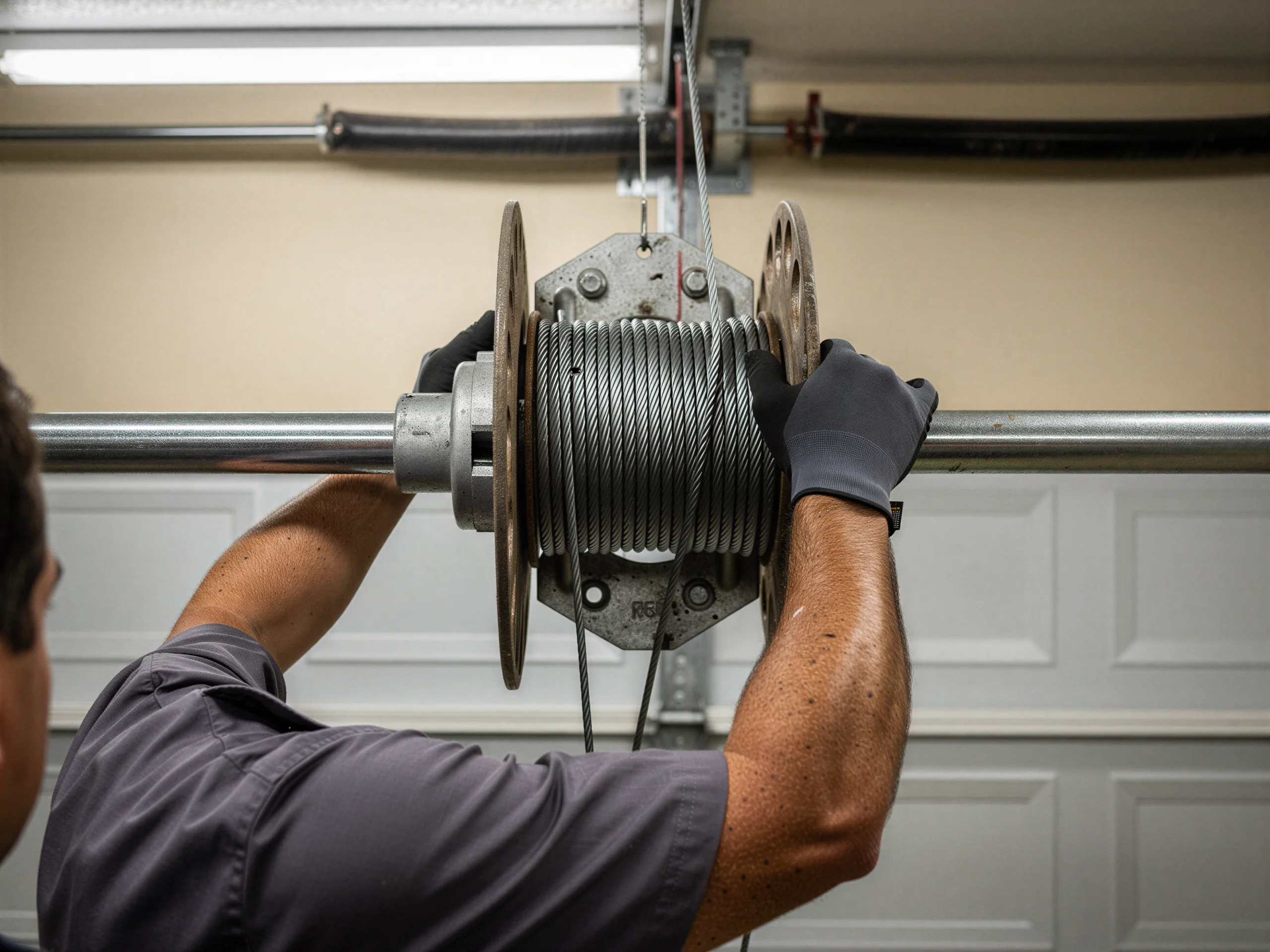
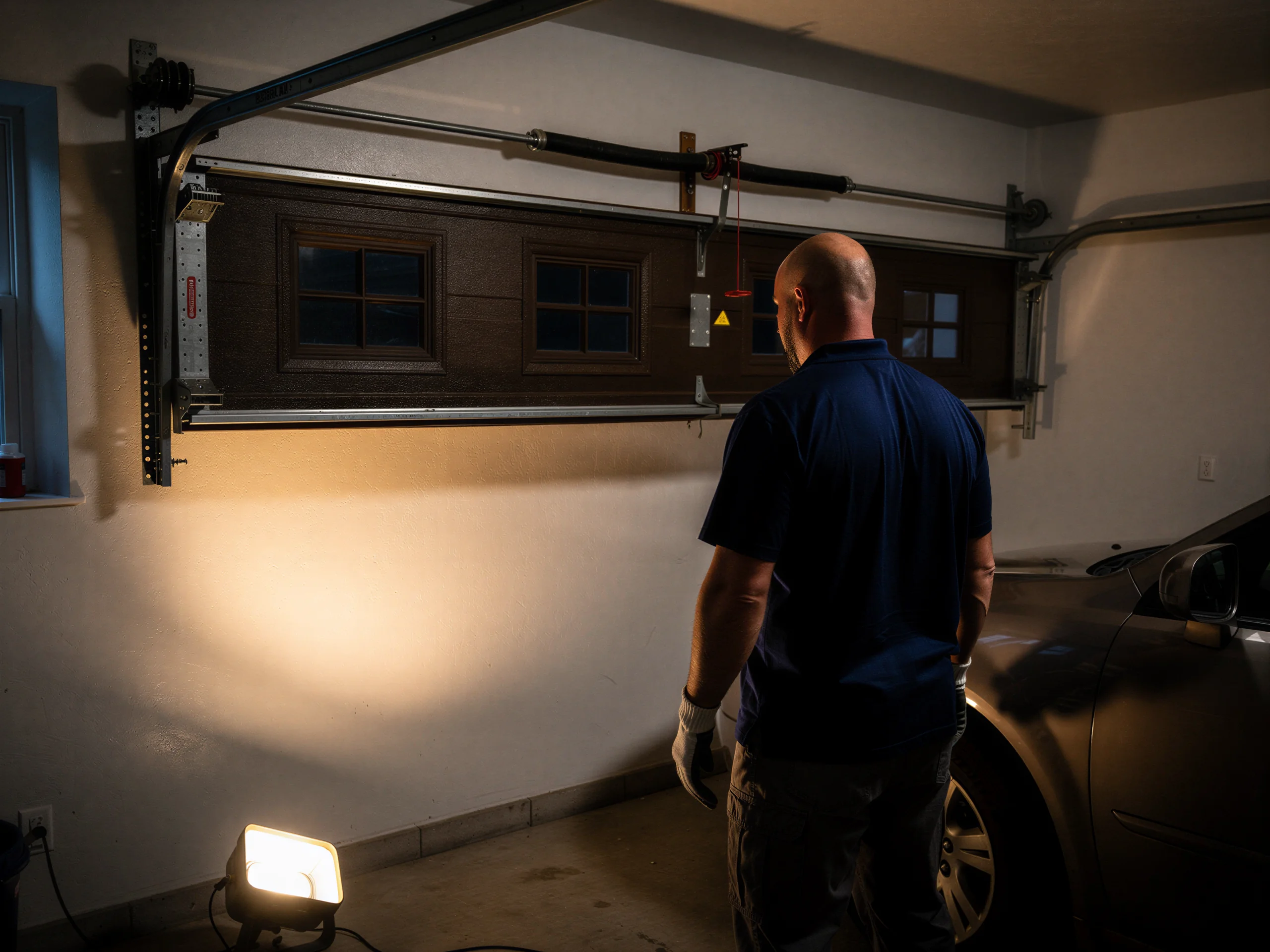
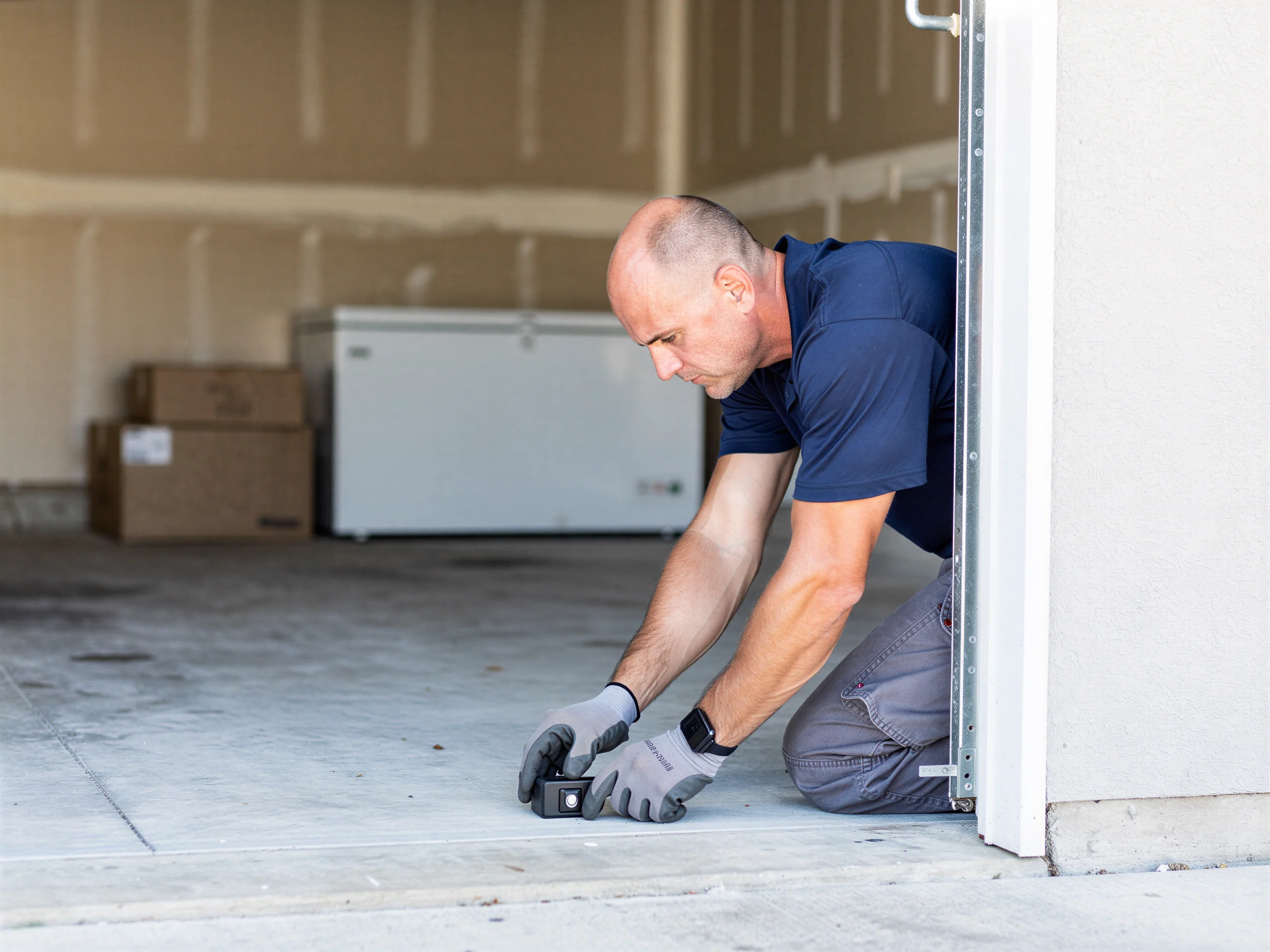
That means standard torsion spring setups, steel sectional doors, and openers from the early 2000s - chain-drive units that are now old enough to have worn drive gears and tired capacitors. We diagnose on site: spring wear, cable fray at the drum, worn rollers in the track, or an opener logic board that's finally quit.
Springs replaced as pairs
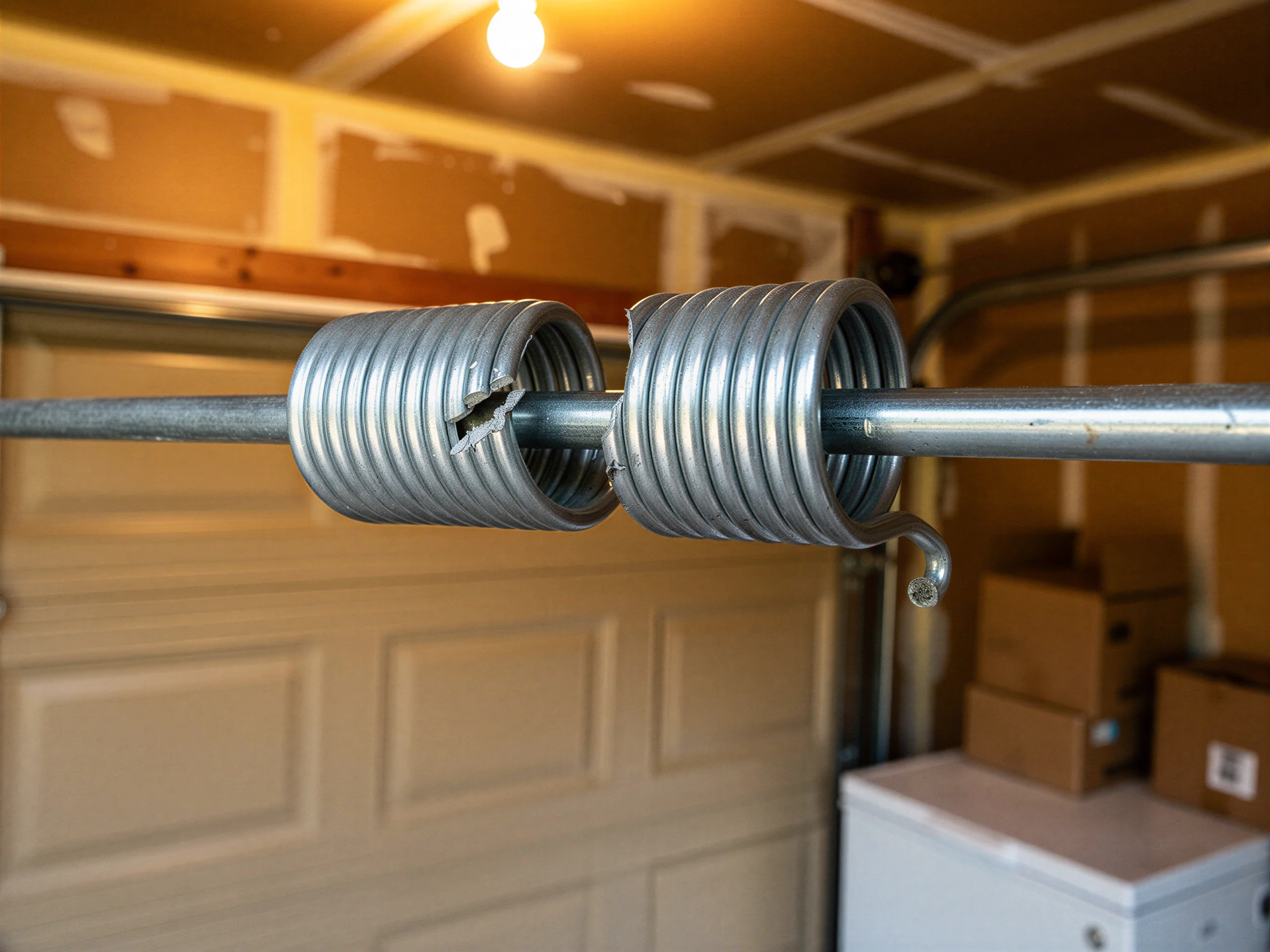
We don't guess from a phone description - if it's a spring, we replace the pair even if only one broke, because the other is the same age and on the same clock.
How Long It Takes
Tolleson is a small stop on our map - about 2,630 households, which is a fraction of the roughly 35,491 households spread across the wider area we run trucks through. A town this size doesn't generate the daily call volume that Surprise itself does, so we're not parked around the corner. We come from Surprise, 19 miles out, which makes Tolleson the farthest regular stop we cover. That distance is baked into how we schedule: we batch Tolleson jobs where we can and give you a realistic arrival window rather than promise something we can't back up from across town. If your spring lets go on a Tuesday morning, expect a call back to set a window that accounts for the drive, not a same-hour knock on the door.
What Causes It Around Here
Severe summer heat is the main stress on doors this age. Steel panels expand and contract through triple-digit days, torsion springs cycle thousands of times a season, and the lubricant in rollers and hinges cooks off faster than it would in a milder climate. On a door built around 2001, you're now twenty-plus years into that cycle, which is exactly when springs reach the end of their rated life and opener gears start stripping. It's not one bad part - it's the accumulated wear of a hot climate on hardware that's old enough to show it. That's the pattern we see on most Tolleson calls, and it's why we check the whole door, not just the part that finally quit.
The Symptom
The complaint we hear most from this part of town is a door that slams the last foot of travel, or one that opens partway and reverses.
Lost tension strains motor
On doors from the early 2000s that usually traces back to a spring that's lost tension - it's not holding its share of the door's weight anymore, so the opener's motor is doing a job it wasn't built to do alone.
Flat-sided rollers cause noise
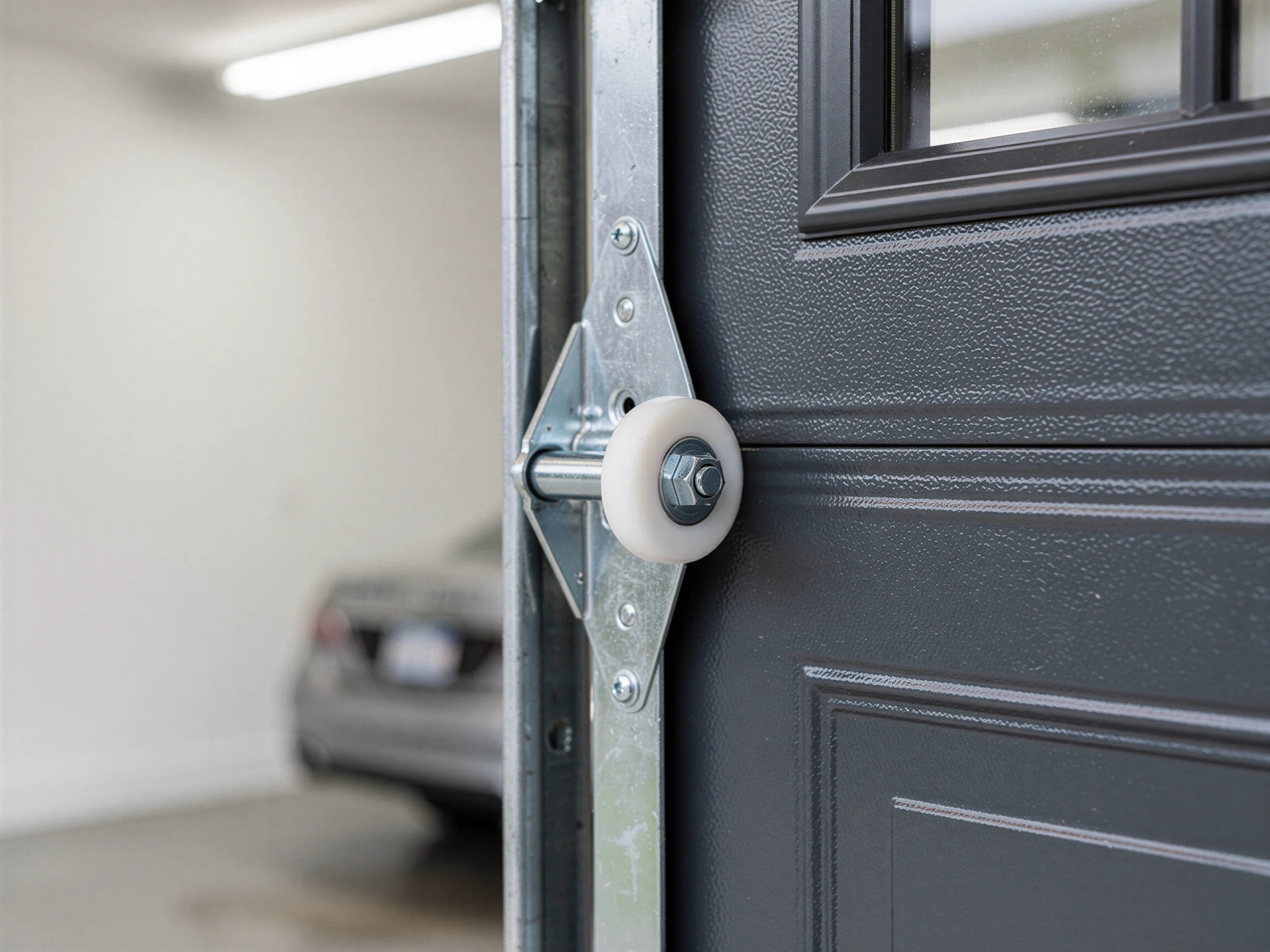
A close second is a door that's noisy on the way down, which is almost always rollers that have gone hard and flat-sided after close to twenty years of summer heat cycling. Neither symptom means the whole door is bad. Both mean something specific failed, and specific is what we fix.
Stocked Parts
We carry common torsion springs sized for the doors typical of this building era, standard-gauge cable, nylon and steel rollers, and universal opener boards that fit most chain-drive units from the 2000s. What we don't carry on the truck is anything proprietary to a specific manufacturer's smart-opener board or an odd-width door - those get ordered, and we'll tell you honestly if that means a return trip instead of a one-visit fix. With median household income here at $55,015, lower than the $68,472 median across the broader area, we try to steer people toward the repair that actually needs doing rather than a full door swap when the opener or a spring is the real problem.
Talk to a local pro
Garage door service in Surprise?
Same-day service with honest, upfront quotes.